Watch the video
The Rich Biodiversity of South America: A Perfect Canvas for Wildlife Stamps
South America is home to some of the world’s most diverse ecosystems, ranging from the Amazon rainforest to the Andes mountains, and the Pantanal wetlands to the coastal regions. This incredible biodiversity is reflected not only in its natural habitats but also in the artistic representations found on postage stamps. Among the most captivating themes featured on South American stamps are the tropical insects and birds, which offer a vibrant glimpse into the continent’s rich natural heritage.
Stamp collecting, or philately, has long been a medium for countries to showcase their unique culture, history, and environment. In South America, wildlife stamps serve as miniature ambassadors of conservation, education, and artistic expression, highlighting species that are often lesser-known outside their native regions.
Historical Context: The Evolution of Wildlife Stamps in South America
The issuance of wildlife stamps in South America dates back to the early 20th century, but it was during the mid-1900s that many countries began to issue series dedicated exclusively to native flora and fauna. Countries such as Brazil, Colombia, Ecuador, and Peru quickly recognized the potential of stamps to promote awareness of their natural treasures.
One of the pioneering issues was Brazil’s 1943 series featuring Amazonian butterflies, which combined scientific accuracy with exquisite artistry. These early stamps not only served as postal currency but also sparked curiosity and appreciation for the continent’s biodiversity worldwide.
Postage Stamps as Tools for Conservation Awareness
As environmental concerns grew globally in the latter half of the 20th century, South American postal authorities increasingly used wildlife stamps to promote conservation efforts. For example, Colombia’s 1985 “Birds of the Andes” series was released in partnership with local conservation groups, with portions of the proceeds supporting habitat preservation projects.
These initiatives underscore how stamps can transcend their functional role and become powerful vehicles for environmental education and advocacy.
Tropical Insects on South American Stamps: A Spectrum of Color and Complexity
Tropical insects are among the most diverse and visually stunning creatures in South America. Featuring them on stamps presents unique challenges and opportunities for artists and designers.
Iconic Insect Species Depicted on Stamps
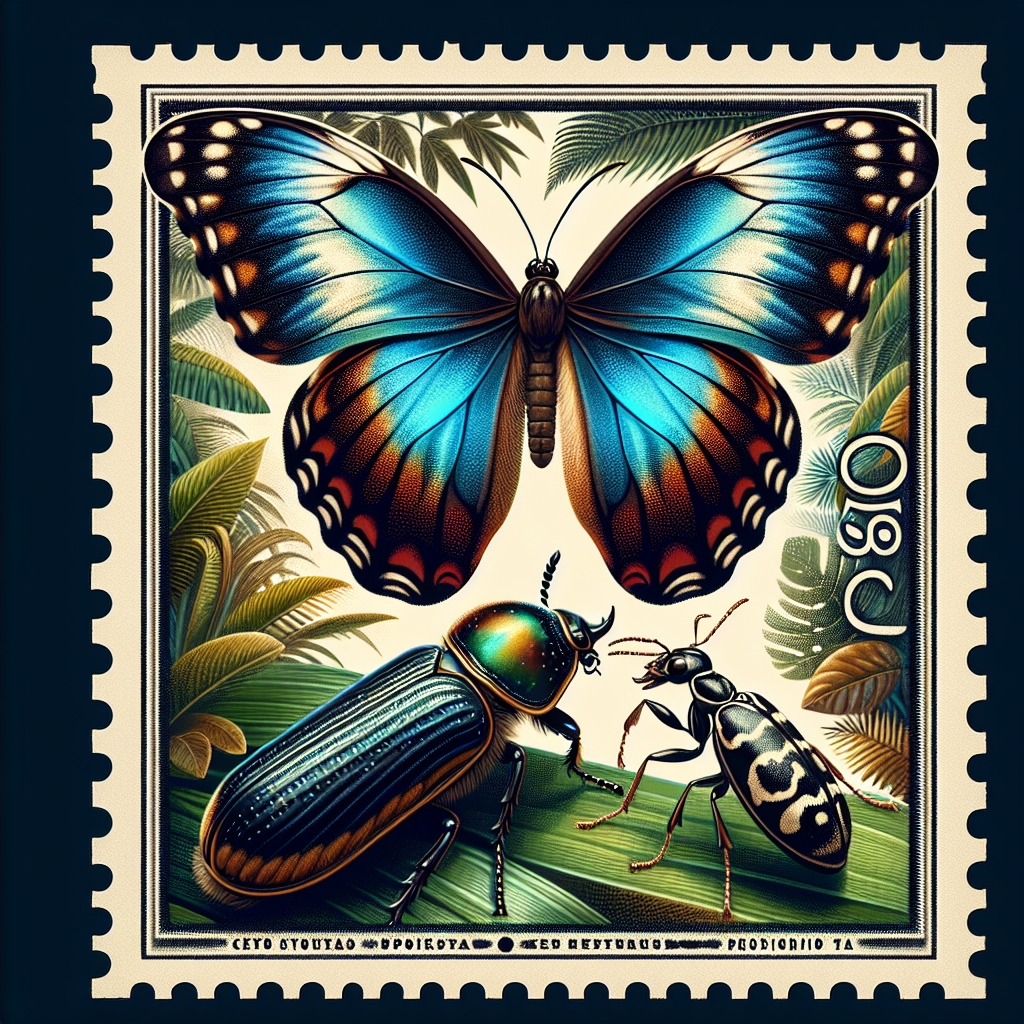
- Blue Morpho Butterfly (Morpho menelaus): Native to the Amazon rainforest, this butterfly is renowned for its iridescent blue wings. Many countries, including Brazil and Peru, have issued stamps showcasing the Blue Morpho’s dazzling colors and delicate wing patterns.
- Goliath Beetle (Goliathus goliatus): One of the largest insects in the world, the Goliath beetle’s striking black and white coloration has been immortalized on stamps from countries like Suriname and Ecuador.
- Leafcutter Ants (Atta spp.): Known for their complex social structures and environmental role as decomposers, leafcutter ants have appeared on educational stamp series that emphasize their ecological importance.
Artistic Techniques and Design
Stamp artists often use macro photography and detailed illustrations to capture the intricate textures and colors of tropical insects. The challenge lies in rendering these small creatures in a miniature format without losing their characteristic features or vibrancy. Techniques such as embossing and special inks have been employed to enhance the tactile and visual appeal, turning stamps into miniature works of art.
South American Birds on Stamps: Celebrating Avian Beauty and Diversity
South America is famed for its spectacular birdlife, including many species found nowhere else on Earth. The continent’s avifauna ranges from the flamboyant macaws and toucans to the elusive harpy eagle and hummingbirds, making it a favorite subject for philatelic issues.
Noteworthy Bird Species Featured on Stamps
- Hyacinth Macaw (Anodorhynchus hyacinthinus): The world’s largest flying parrot, this brilliant blue bird has been featured on numerous Brazilian stamps, symbolizing both beauty and conservation challenges.
- Andean Cock-of-the-rock (Rupicola peruvianus): Known for its vivid orange plumage and unique mating displays, this bird is a common motif in Peruvian and Ecuadorian stamps.
- Amazonian Hummingbirds: Several species of hummingbirds, admired for their iridescent feathers and rapid wing beats, have been depicted in detailed series celebrating the Amazon’s rich biodiversity.
The Role of Stamp Art in Promoting Bird Conservation
Many South American countries partner with ornithological societies and conservation organizations when issuing bird stamps. These series often include informative text about the species’ habitat, behavior, and conservation status, helping to educate the public and raise funds for protective measures.
Collector Tips: Building a South American Wildlife Stamp Collection
For philatelists interested in tropical insects and birds from South America, there are several ways to build a rewarding collection that combines beauty, history, and conservation themes.
Starting Your Collection
- Research Key Issues: Identify iconic and limited-edition series from countries like Brazil, Colombia, Peru, Ecuador, and Venezuela that focus on tropical insects and birds.
- Condition Matters: Seek stamps in mint condition or those with clear cancellations for historical context.
- Use Specialist Catalogues: Philatelic catalogues specializing in South American issues can help track rare varieties and guide your acquisitions.
Display and Preservation
- Framed Displays: Consider handcrafted framed stamp displays to showcase your collection elegantly while protecting the stamps from damage.
- Storage Solutions: Use acid-free albums and avoid exposure to sunlight and humidity to maintain the stamps’ vibrant colors.
Connecting with Fellow Collectors
Joining philatelic societies or online forums focused on South American wildlife stamps can provide valuable insights, trading opportunities, and access to expert knowledge.
Interesting Anecdotes and Facts
- The Blue Morpho butterfly’s wings reflect light in such a way that their color changes depending on the angle, a phenomenon known as structural coloration, which stamp artists strive to replicate.
- The Hyacinth Macaw faced severe population declines due to habitat loss and the pet trade, but its frequent appearance on stamps has helped raise awareness and support for conservation efforts.
- Some South American countries have issued stamps with augmented reality features, allowing collectors to scan the stamp and see animated versions of the depicted insects or birds.
Visual Summary — Article in Motion
Conclusion
South America’s tropical insects and birds offer a breathtaking window into the continent’s natural splendor, and postage stamps provide an intimate and artistic medium to celebrate this biodiversity. Whether you are a seasoned philatelist or a nature enthusiast, exploring these wildlife stamps enriches your appreciation of South America’s ecological treasures and the ongoing efforts to preserve them. Collecting and displaying these stamps not only brings beauty into your home but also supports a greater understanding of the vital importance of conservation.