Watch the video
Introduction
The Cuban Revolution stands as one of the 20th century’s most significant political upheavals, reshaping the island’s social, economic, and international landscape. Beyond the battles and speeches, the revolution’s essence was chronicled in an unexpected medium: postage stamps. These small, adhesive pieces of paper served not only as tools for communication but also as powerful vehicles of propaganda and historical documentation. From the last days of Fulgencio Batista’s regime to Fidel Castro’s rise and consolidation of power, Cuban stamps vividly captured the nation’s dramatic transition.
Historical Context: Cuba Before and During the Revolution
Before the revolution, Cuba was under the authoritarian rule of Fulgencio Batista, whose government was marked by corruption, inequality, and close ties to the United States. The dissatisfaction with Batista’s regime culminated in an armed uprising led by Fidel Castro and his revolutionary movement in the 1950s. The revolution officially succeeded on January 1, 1959, when Batista fled the country, paving the way for a new socialist government.
Throughout these turbulent years, postage stamps served as both communication tools and instruments of state messaging. As literacy and postal services expanded, stamps became a way to reach both Cuban citizens and the international community, conveying ideological narratives and celebrating revolutionary milestones.
Stamps Under Batista: Symbolism of Authority and Stability
Under Batista’s rule, Cuban stamps often reflected traditional themes emphasizing national pride, economic progress, and cultural heritage. These stamps typically featured:
- Portraits of Cuban historical figures and national heroes.
- Depictions of the island’s natural beauty and landmarks.
- Symbols of modernization and economic development.
Batista’s government used stamps to project an image of stability and progress, despite growing unrest. The stamps avoided controversial political messaging, focusing instead on unity and nationalism, reflecting the regime’s desire to maintain legitimacy.
Collector’s Tip:
Stamps issued during Batista’s final years are often sought after due to their historical context. Collectors should look for limited print runs and overprints that indicated political shifts during the late 1950s, as these can be particularly valuable.
The Revolutionary Shift: Stamps as Tools of Propaganda
Following the revolution’s success, the new Cuban government quickly recognized the power of postage stamps as propaganda instruments. The stamps issued during the early Castro years were markedly different, imbued with revolutionary symbolism and ideological messaging.
Key Themes in Post-Revolution Cuban Stamps
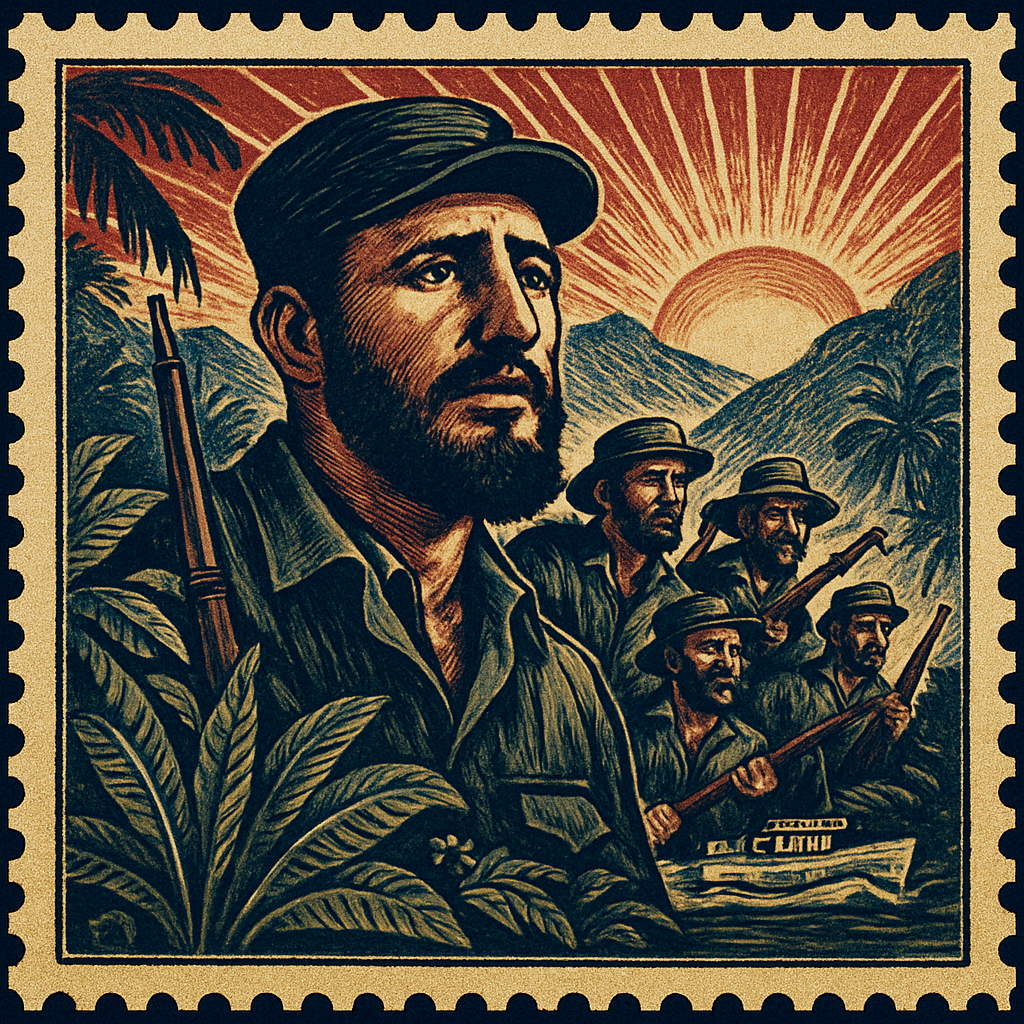
- Celebration of Revolutionary Leaders: Fidel Castro, Che Guevara, Camilo Cienfuegos, and other figures were frequently depicted, often in heroic and idealized forms.
- Commemoration of Revolutionary Events: The landing of the Granma yacht, the attack on the Moncada Barracks, and the victory of January 1, 1959, were immortalized on stamps.
- Promotion of Socialist Ideology: Stamps highlighted themes such as literacy campaigns, agrarian reform, and international solidarity with other socialist countries.
This transformation in stamp design reflected the government’s intent to educate the populace and showcase Cuba’s new identity domestically and abroad.
Interesting Anecdote:
One notable stamp issued in 1961 depicted Che Guevara alongside a young Cuban literacy campaigner, symbolizing the revolutionary commitment to education. This stamp was widely circulated and became a collector’s favorite, embodying the intersection of politics and social reform.
Artistic Styles and Design Evolution
The artistic approach to Cuban stamps evolved dramatically through the revolution. Early revolutionary stamps adopted bold, graphic styles with strong contrasts and revolutionary iconography, influenced by Soviet design aesthetics. Later issues incorporated more nuanced and diverse artistic expressions, including abstract elements and vibrant colors.
The use of iconography such as the Cuban flag, machetes, and revolutionary slogans reinforced the stamps’ ideological messages. Moreover, the stamps served as miniature canvases for Cuban artists, who contributed to both propaganda and cultural celebration.
Collector’s Tip:
When building a Cuban revolutionary stamp collection, attention to printing techniques and errors can be rewarding. Some early revolutionary stamps were printed under resource constraints, leading to variations and misprints that are prized by philatelists.
Cuban Stamps on the International Stage
Cuba’s revolutionary stamps also played a role in international diplomacy and solidarity. Stamps commemorated Cuba’s support for anti-colonial movements in Africa, Latin America, and Asia, and its alignment with the Soviet bloc during the Cold War.
These internationalist themes helped project Cuba’s image as a leader in the global struggle for socialism and independence from imperialist forces. They also served to counteract negative portrayals from Western media by presenting a narrative of liberation and progress.
Historical Fact:
In 1962, Cuba issued a stamp honoring Patrice Lumumba, the Congolese independence leader, shortly after his assassination. This issue was part of a broader campaign to highlight Cuba’s commitment to anti-imperialist causes worldwide.
The Legacy of Revolutionary Cuban Stamps Today
Today, Cuban stamps from the revolutionary period offer a rich window into the island’s complex history. They are prized by collectors for their artistic merit, historical significance, and the stories they tell about a nation undergoing profound change.
Obelisk Stamps, a premium online store specializing in handcrafted framed stamp displays, offers collectors the opportunity to own and showcase these remarkable pieces of history. Whether you are a seasoned philatelist or a history enthusiast, Cuban revolutionary stamps provide a tangible connection to one of the most compelling narratives of the 20th century.
Visual Summary — Article in Motion
Conclusion
From Batista’s last days to Castro’s enduring legacy, Cuban postage stamps have chronicled the nation’s revolutionary journey with vivid imagery and ideological fervor. These stamps not only facilitated communication but also became potent tools of propaganda, education, and international solidarity. For collectors and historians alike, they remain invaluable artifacts that capture the spirit and transformation of Cuba during one of its most pivotal eras.