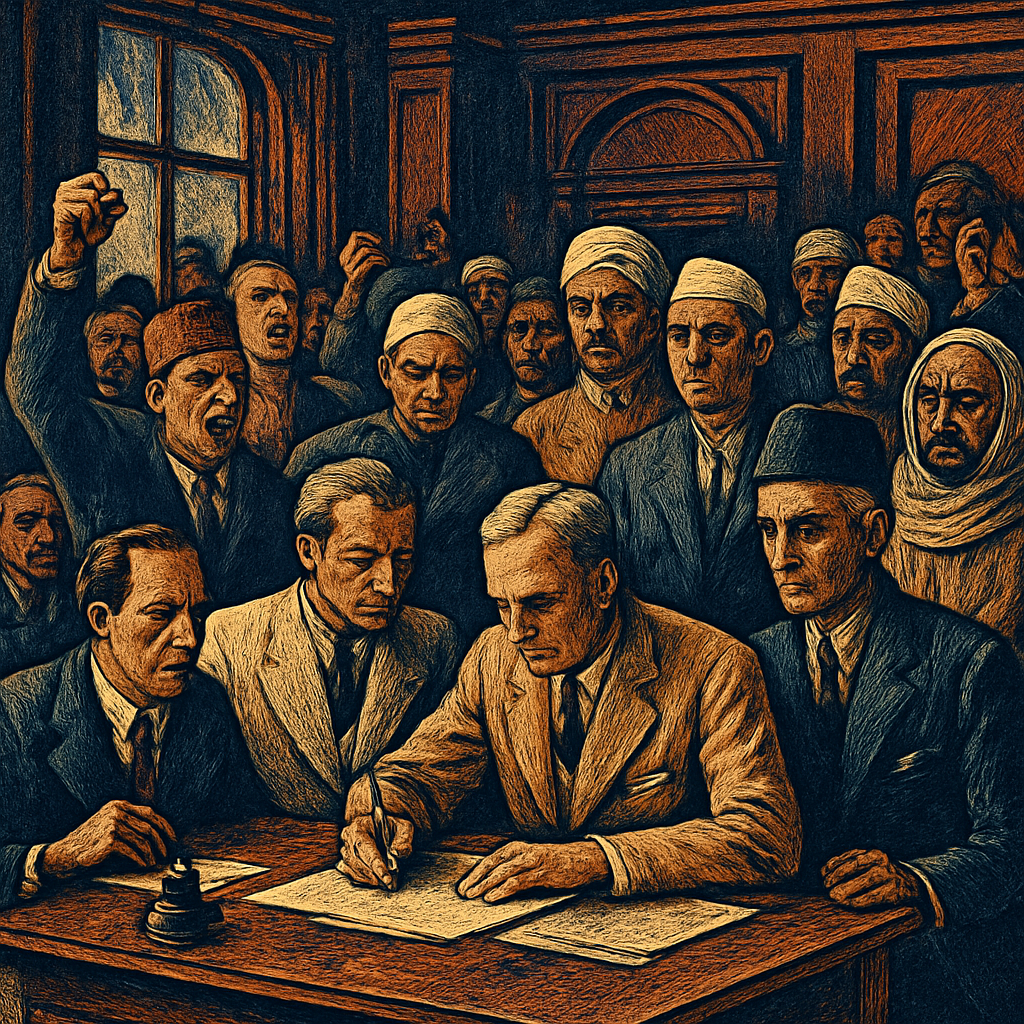
Watch the video
Introduction to the Partition of India and Pakistan
The Partition of India and Pakistan in 1947 stands as one of the most significant and traumatic events in South Asian history. This monumental division not only redrew political boundaries but also deeply affected millions through violence, displacement, and a profound reshaping of identities. Stamps issued during and after this period provide a unique lens into how the momentous event was commemorated, perceived, and processed by the newly formed nations.
As tangible artifacts that travel across borders and through time, postage stamps serve both as tools of communication and as powerful symbols of national narratives. The stamps related to the Partition capture stories of division, loss, hope, and the forging of new identities, making them invaluable pieces for collectors and historians alike.
The Historical Context of Partition
The British colonial rule in India ended in August 1947, resulting in the establishment of two independent dominions: India and Pakistan. This partition was primarily based on religious demographics, with Pakistan conceived as a homeland for Muslims and India as a secular state with a Hindu majority.
However, the division was hastily executed and poorly planned, leading to massive communal violence, the displacement of an estimated 10-15 million people, and the deaths of hundreds of thousands. The scars left by this upheaval continue to influence the geopolitics and social fabric of the region.
Key Dates and Events
- June 3, 1947: The British Parliament passes the Indian Independence Act.
- August 15, 1947: India gains independence.
- August 14, 1947: Pakistan gains independence.
- 1947-1948: Mass migrations and communal riots peak.
Early Postal Services Amidst Division
The postal systems had to rapidly adapt to the emergent political realities. Before independence, the Indian Postal Service was unified under British administration. Post-partition, both India and Pakistan had to establish separate postal authorities, issue distinct stamps, and create new routes.
Initially, Pakistan overprinted existing Indian stamps with the word “Pakistan” to quickly provide postal services. This practice reveals the urgency and complexity of setting up a new nation’s identity through stamps.
Overprinted Stamps: A Transitional Symbol
The overprinted stamps issued by Pakistan in late 1947 are highly valued by collectors as they symbolize the birth pains of a new country. These stamps often featured the original Indian designs but bore the overprint “PAKISTAN” in bold letters, underscoring the political shift.
Similarly, the princely states that were integrating with India or Pakistan issued their own stamps or overprints, reflecting the fractured and fluid nature of the time.
Stamps as Narratives of Displacement and Trauma
While early stamps primarily focused on administrative needs, subsequent issues began to reflect the human cost of partition. Postal commemorations began to include themes of refugee rehabilitation, national unity, and remembrance of those lost in the communal violence.
These thematic stamps serve as poignant reminders of the partition’s human dimension, bringing stories of displacement and longing to the forefront.
Commemorative Issues Highlighting Refugees and Rehabilitation
India, in particular, issued stamps that highlighted the government’s efforts to rehabilitate millions of refugees. For example, the 1950 Refugee Rehabilitation stamp depicts the building of homes and infrastructure, symbolizing hope amidst devastation.
Such stamps emphasize the resilience of people and the role of state institutions in rebuilding lives, embedding these narratives into the collective memory.
National Identity and Symbolism in Post-Partition Stamps
Both India and Pakistan used stamps to consolidate their national identities. The choice of imagery, language, and motifs on stamps played a crucial role in nation-building and asserting sovereignty.
India’s Emphasis on Unity and Secularism
Post-partition Indian stamps often featured iconic leaders like Mahatma Gandhi and Jawaharlal Nehru, symbols of non-violent struggle and democratic ideals. The stamps also showcased India’s cultural diversity, reinforcing the secular and pluralistic vision of the new nation.
Pakistan’s Islamic Identity and Heritage
Pakistan’s stamps emphasized Islamic heritage, with depictions of mosques, Islamic calligraphy, and Urdu script. These choices reflected the nation’s foundation as a Muslim homeland and helped foster a collective identity distinct from India.
Interesting Anecdotes from the Postal History of Partition
One fascinating story involves the issuance of the first stamp of Pakistan on October 9, 1947, featuring the crescent and star emblem. Due to logistical challenges, many of these stamps were printed in Great Britain and shipped to Pakistan, highlighting the international dimensions of this local upheaval.
Another anecdote is about the princely state of Jammu and Kashmir, whose stamps became a contentious issue post-partition due to the region’s disputed status. Stamps from this area often carried political significance well beyond their postal value.
Collector Tips: Building a Partition-Themed Stamp Collection
For philatelists interested in this era, collecting stamps related to the Partition offers both historical richness and rarity. Here are some tips to guide your collection:
- Start with Overprints: Acquire Pakistan’s initial overprinted Indian stamps as foundational pieces.
- Explore Princely State Issues: Focus on stamps from states like Jammu and Kashmir, Hyderabad, and others that issued transitional stamps.
- Look for Commemoratives: Post-independence stamps commemorating refugee rehabilitation and national identity themes provide narrative depth.
- Condition Matters: Due to the age and historical turmoil, well-preserved stamps from this period are scarce and valuable.
- Research Postal History: Collect postal covers and cancellations to understand routes and usage during partition.
The Complex Legacy of Division in Stamp Iconography
Over the decades, stamps from India and Pakistan have continued to reflect the evolving relationship between the two nations. From periods of hostility to attempts at diplomacy, stamp iconography has mirrored political realities and aspirations.
For instance, joint issues and commemorative stamps celebrating peace efforts provide hopeful counterpoints to the initial trauma, illustrating how stamps serve as barometers of bilateral relations.
Modern Commemorations and Reflection
Recent decades have seen stamps that commemorate the 50th and 70th anniversaries of independence and partition, inviting reflection on the complex legacy of division. These issues often balance remembrance with messages of peace and reconciliation, highlighting how postage stamps remain relevant in contemporary dialogues.
Visual Summary — Article in Motion
Conclusion
The stamps issued during and after the Partition of India and Pakistan are far more than mere postal instruments. They are storytellers, chronicling the birth of nations, the pain of division, and the enduring quest for identity and unity. For collectors, historians, and anyone interested in South Asian history, these stamps offer a tangible connection to one of the 20th century’s defining moments.
Through their imagery and issuance, they reveal the complexities of memory, trauma, and hope that continue to shape the subcontinent today.