Watch the video
Introduction
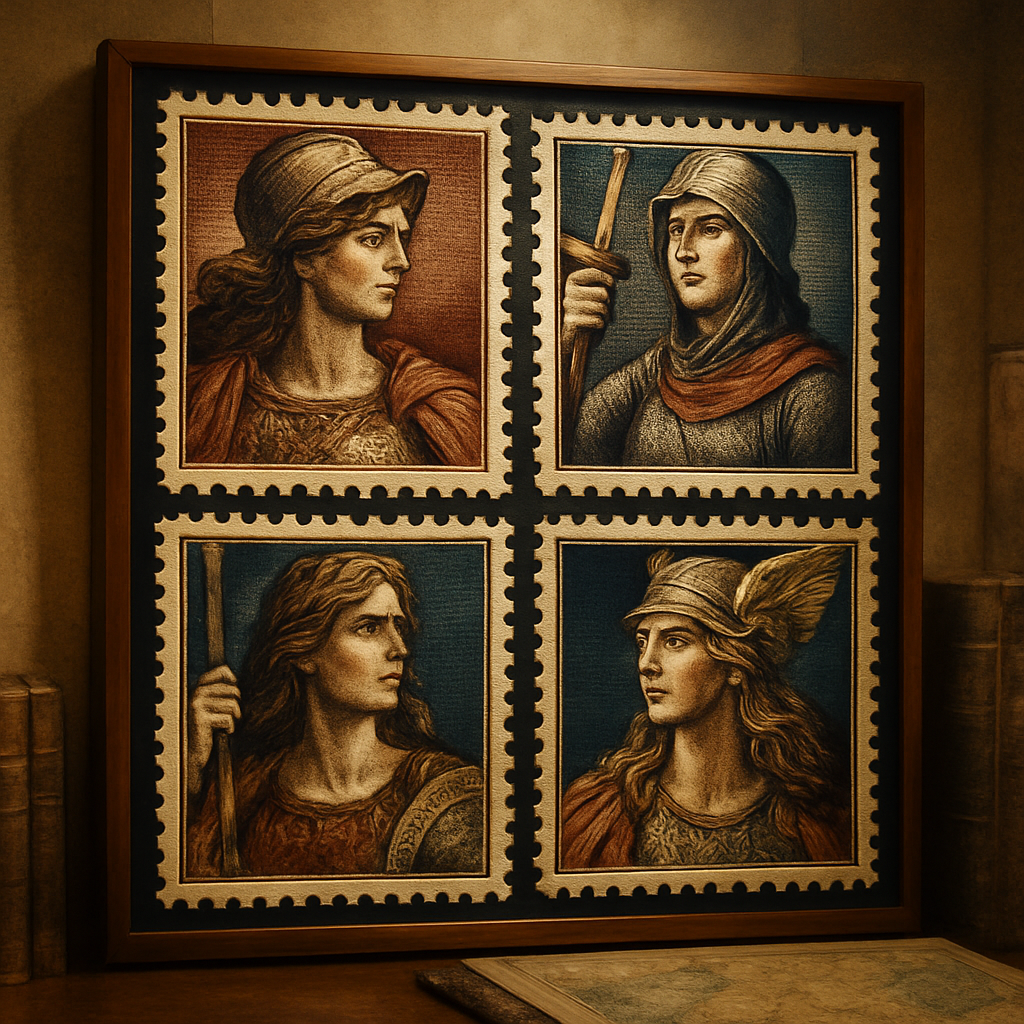
Throughout history, revolutionary movements have been shaped and propelled by courageous individuals committed to social change and political freedom. Among these figures, women warriors have played pivotal roles—from legendary medieval heroines to modern liberation fighters. Their stories of bravery, resilience, and leadership have not only inspired generations but have also been commemorated on postage stamps worldwide. These miniature works of art serve as powerful symbols, celebrating female contributions to revolutionary causes and preserving their legacies for posterity.
The Historical Significance of Women Warriors
Women warriors have appeared throughout history, often challenging societal norms and gender roles. Their participation in battles and revolutions frequently came with great personal risk, yet their impact was profound. By examining the stamps that honor these women, we gain insight into the evolving recognition of female agency in political and military spheres.
Joan of Arc: The Archetypal Female Warrior
No discussion of women warriors is complete without mentioning Joan of Arc, the French peasant girl who led armies during the Hundred Years’ War. Born in the early 15th century, Joan claimed divine guidance and became a symbol of national pride and resistance against English occupation. Her martyrdom and eventual canonization cemented her status as a cultural icon.
Joan of Arc has been featured on stamps issued by France and many other countries, often portrayed in armor with a banner or sword. These depictions highlight her dual identity as both a warrior and a saint, underscoring her enduring legacy in revolutionary and religious contexts.
Women in 19th-Century Revolutionary Movements
The 19th century saw numerous revolutionary uprisings and independence struggles where women played crucial roles. Figures such as Harriet Tubman in the United States, who was instrumental in the Underground Railroad, and Rani Lakshmibai of Jhansi in India, who fought against British colonial rule, have been immortalized on stamps.
Rani Lakshmibai, often depicted riding a horse and wielding a sword, symbolizes resistance and patriotism. Her image on Indian stamps conveys both national pride and the recognition of female valor in the struggle against imperialism.
Women Warriors in 20th Century Liberation Movements
The 20th century was marked by a surge of revolutionary activity worldwide, including anti-colonial struggles, civil rights movements, and feminist activism. Women were frontline fighters, strategists, and symbols of hope.
Emmeline Pankhurst and the Suffragette Movement
Emmeline Pankhurst, leader of the British suffragette movement, is another revolutionary woman commemorated on stamps. While not a warrior in the traditional battlefield sense, her militant activism and leadership helped secure women’s voting rights in the UK.
Stamps featuring Pankhurst often emphasize her determination and the struggle for equality, connecting political revolution with social reform.
Vietnamese Liberation Heroes: The Trung Sisters
The Trung Sisters, Trung Trac and Trung Nhi, are celebrated Vietnamese heroines who led a rebellion against Chinese rule in the 1st century CE. Their legacy endures as symbols of Vietnamese nationalism and female strength.
Vietnamese stamps often portray the sisters in battle attire, reflecting their roles as military leaders who defied patriarchal norms to inspire a revolution.
Modern Female Fighters: The Case of Leymah Gbowee
Liberian peace activist Leymah Gbowee, awarded the Nobel Peace Prize for her role in ending civil war, has also been honored on stamps. Though more associated with peacebuilding than armed combat, her leadership in mobilizing women for social change exemplifies the broad spectrum of revolutionary female figures.
Stamps as Cultural and Political Artifacts
Postage stamps do more than facilitate communication; they are cultural artifacts that reflect political narratives and societal values. Featuring women warriors on stamps communicates recognition of their contributions and challenges traditional gender stereotypes.
Many countries have used stamps to promote national identity by honoring female revolutionary figures. This is especially prevalent in countries emerging from colonial rule or conflict, where such icons serve as unifying symbols.
Design Elements and Symbolism
Stamp designs often incorporate symbolic elements to convey the significance of women warriors. These may include:
- Weaponry and Armor: Signifying martial prowess and courage.
- National Flags or Emblems: Connecting the figure to the country’s identity and struggle.
- Religious or Mythological Symbols: Elevating the figure to legendary or sacred status.
- Portraiture: Humanizing the warrior and emphasizing her leadership qualities.
Collectors appreciate these design nuances, which enhance the historical and artistic value of the stamps.
Collector Tips: Building a Thematic Collection of Women Warriors on Stamps
Thematic collecting is a popular philatelic pursuit, and women warriors form a compelling theme that intersects history, art, and social change.
Research and Planning
Start by compiling a list of notable female revolutionaries featured on stamps. Resources include stamp catalogs, online databases, and specialized philatelic literature.
Focus on Geographic and Historical Diversity
To enrich your collection, seek stamps from different countries and eras. This approach highlights the global nature of women’s revolutionary roles and the varied ways they are commemorated.
Condition and Authenticity
Prioritize stamps in good condition and verify authenticity, especially for rare issues. Presentation in high-quality framed displays, like those offered by Obelisk Stamps, can enhance both preservation and aesthetic appeal.
Engage with Philatelic Communities
Join clubs and online forums focused on thematic collecting to share knowledge, trade items, and stay informed about new releases featuring women warriors.
Interesting Anecdotes and Lesser-Known Figures
Beyond the famous names, many lesser-known women warriors have been immortalized on stamps, revealing fascinating stories.
Nzinga Mbande of Angola
Queen Nzinga Mbande, a 17th-century ruler and military strategist, fiercely resisted Portuguese colonization. Stamps issued by Angola and other countries celebrate her diplomatic and martial skills.
Lozen, Apache Warrior
Lozen was a skilled warrior and prophetess among the Apache people in the American Southwest. U.S. and Native American heritage stamps have featured her, acknowledging indigenous women’s roles in resistance.
Manuela Sáenz of South America
Manuela Sáenz, a revolutionary and confidante of Simón Bolívar, played a key role in South America’s independence movements. Stamps from Ecuador and other nations recognize her bravery and influence.
Visual Summary — Article in Motion
Conclusion
Women warriors on stamps provide a unique window into history, art, and social evolution. By commemorating female revolutionaries, postage stamps honor their courage and leadership while challenging traditional narratives that often marginalize women’s roles in political struggles. For collectors and historians alike, these stamps serve as enduring tributes to the indomitable spirit of women who shaped revolutionary movements across centuries and continents.