Watch the video
Historical Context of the 1971 Moon Landing Stamp
The 1971 Moon Landing Stamp stands as a vivid testament to one of the most iconic moments in American and global history: the Apollo 11 mission’s successful lunar landing on July 20, 1969. This historic event marked the first time humans set foot on the moon, fulfilling President John F. Kennedy’s ambitious goal set in 1961. The U.S. Postal Service chose to commemorate this unprecedented achievement through a special stamp issued in 1971, embedding the spirit of exploration and national pride within a small, yet powerful piece of postal art.
Released nearly two years after the event, the stamp served not only as a celebration of technological and scientific triumph but also as a cultural symbol during an era marked by Cold War tensions and the space race against the Soviet Union. The issuance of this stamp helped cement the Apollo 11 mission’s legacy in public memory and accessible philatelic history.
Artistic Elements and Design Features
The 1971 Moon Landing Stamp is a masterclass in combining artistry with symbolic storytelling. Designed by Paul Calle, an artist closely associated with NASA, the stamp captures a moment of awe and human achievement. Calle was personally commissioned by NASA to document the Apollo missions through his artwork, making his involvement in the stamp’s creation a mark of authenticity and artistic integrity.
The stamp features the famous image of astronaut Buzz Aldrin standing on the lunar surface, with the American flag planted firmly beside him. The lunar module is visible in the background, and the Earth is depicted as a distant blue orb in the blackness of space. The composition reflects not only the triumph of the mission but also the profound isolation and vastness of space.
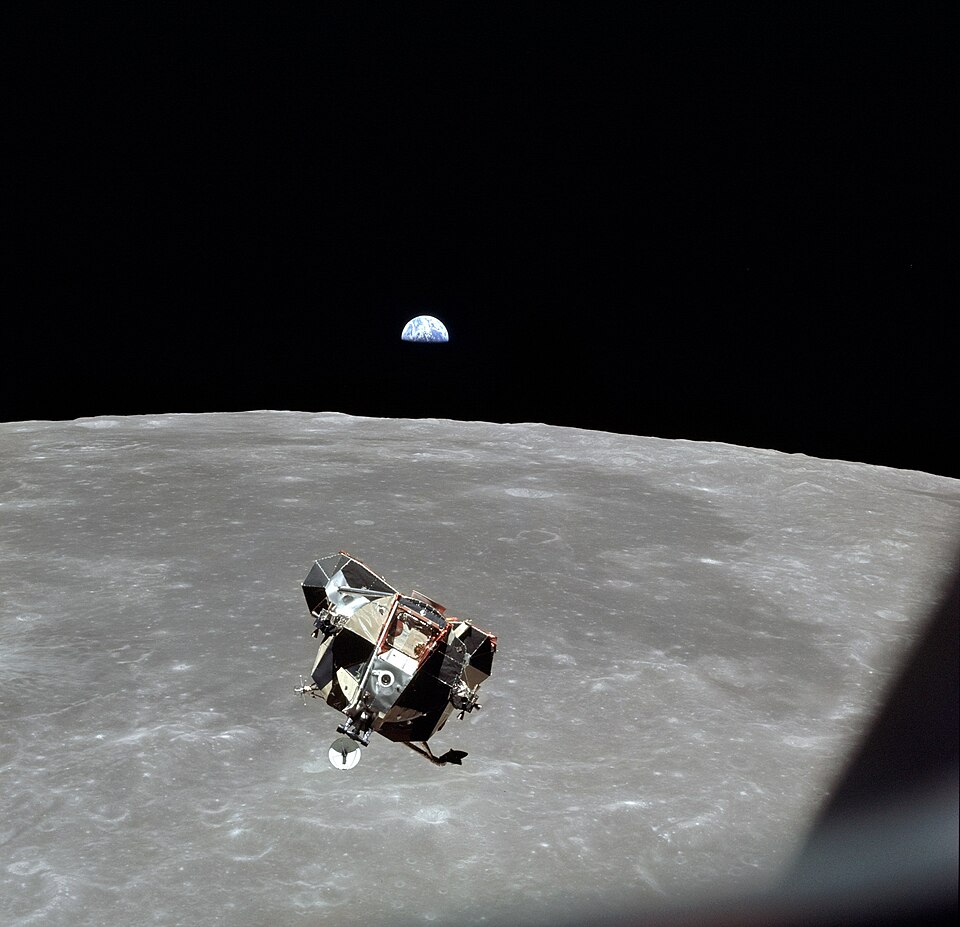
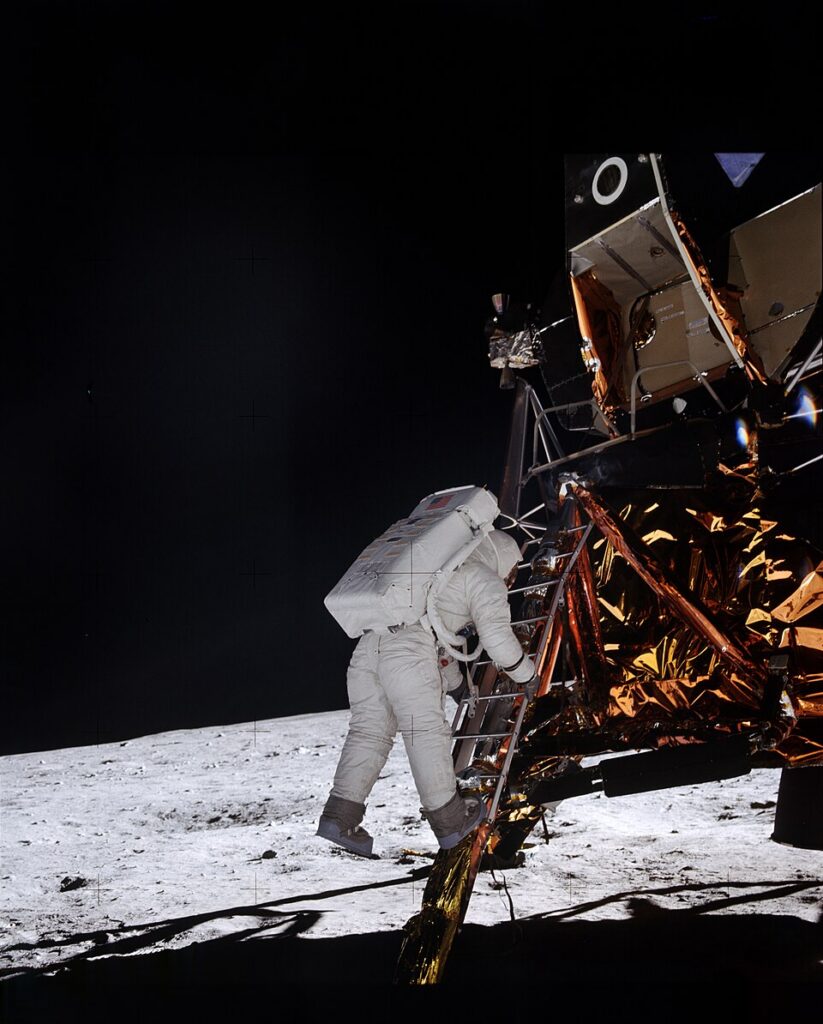
The color palette is carefully chosen to emphasize contrast: the stark whites and grays of the lunar surface and astronaut’s suit juxtapose dramatically against the deep black of space, while the vibrant red, white, and blue of the flag underscore national pride. The inscription “First Man on the Moon” and the date “July 20, 1969” are elegantly integrated, anchoring the image in its historic context.
Collectors and art enthusiasts often praise the stamp for its balance between photographic realism and artistic interpretation, capturing a dynamic and emotional narrative within a miniature canvas.
Paul Calle’s Anecdote: Capturing the Moonwalk
Paul Calle’s artistic journey to produce the stamp’s design is itself a compelling story. In July 1969, Calle was aboard the recovery ship USS Hornet, which retrieved the astronauts after their splashdown. He sketched the astronauts as they emerged from their capsule, capturing the raw emotion and relief of their return. Calle’s sketches and firsthand observations informed the stamp’s design, ensuring it was not simply a generic representation but a deeply personal and precise homage to the mission.
Historical Significance in the Broader Space Race
The issuance of the 1971 stamp must be understood within the larger geopolitical context of the Cold War. The United States and the Soviet Union were locked in a fierce competition for technological and ideological supremacy, with space exploration as a highly publicized arena. The Apollo 11 success was a pivotal victory for the U.S., symbolizing not only scientific prowess but also democratic values and innovation.
By commemorating the moon landing on a postage stamp, the U.S. Postal Service participated in a form of cultural diplomacy and national storytelling. The stamp circulated widely across the country and internationally, spreading a message of American ingenuity and the boundless possibilities of human endeavor.
The stamp also played a role in cementing the narrative of space exploration as a collective human achievement, inspiring generations of scientists, engineers, and dreamers worldwide. The 1971 release ensured that the Apollo 11 mission would be remembered not just in textbooks but also in everyday correspondence.
Anecdote: First Day of Issue Ceremony
On the stamp’s official release day, July 20, 1971, a ceremony was held at the Smithsonian Institution’s National Air and Space Museum in Washington, D.C. Neil Armstrong, Buzz Aldrin, and Michael Collins attended, linking the stamp directly to the astronauts it commemorated. Armstrong’s brief remarks highlighted how the stamp served as a tangible reminder of the mission’s risks and rewards. This event underscored the stamp’s role as a cultural artifact bridging history, art, and public memory.


Practical Tips for Collectors Interested in Apollo 11 Stamps
For philatelists and history enthusiasts eager to add the 1971 Moon Landing Stamp to their collections, a few practical considerations can enhance both enjoyment and value:
- Authentication: Ensure the stamp is genuine by purchasing from reputable dealers or certified auctions. Counterfeit commemorative stamps occasionally appear in the market.
- Condition: Mint condition stamps—unused, with original gum intact—are highly prized. However, first day covers (FDCs) bearing the stamp and special cancellations from the release ceremony can also be significant collectibles.
- Contextual Collecting: Consider collecting related Apollo 11 philatelic items such as souvenir sheets, NASA cachets, or postal history pieces from 1969 to 1971 to create a richer narrative.
- Proper Storage: Protect the stamp from light, humidity, and physical damage by using archival-quality albums and sleeves.
Collectors often find that understanding the historical and artistic nuances of the stamp enhances appreciation and deepens emotional connection to this epochal achievement.
Visual Summary — Article in Motion
Legacy of the 1971 Moon Landing Stamp in Philately and Culture
More than fifty years since its release, the 1971 Moon Landing Stamp remains a cornerstone of American philately and a symbol of human aspiration. It represents a moment when art, science, and history converged to celebrate mankind’s first steps on another celestial body.
In the broader cultural imagination, the stamp encapsulates the optimism and audacity of the Space Age. It continues to inspire artists, collectors, and historians alike, serving as a reminder of the power of small artifacts to capture profound human stories.
As new space missions unfold and humanity looks toward Mars and beyond, the 1971 stamp stands as a treasured milestone, linking past triumphs with future dreams.