Watch the video
Introduction to the Silk Road Republics’ Postal Legacy
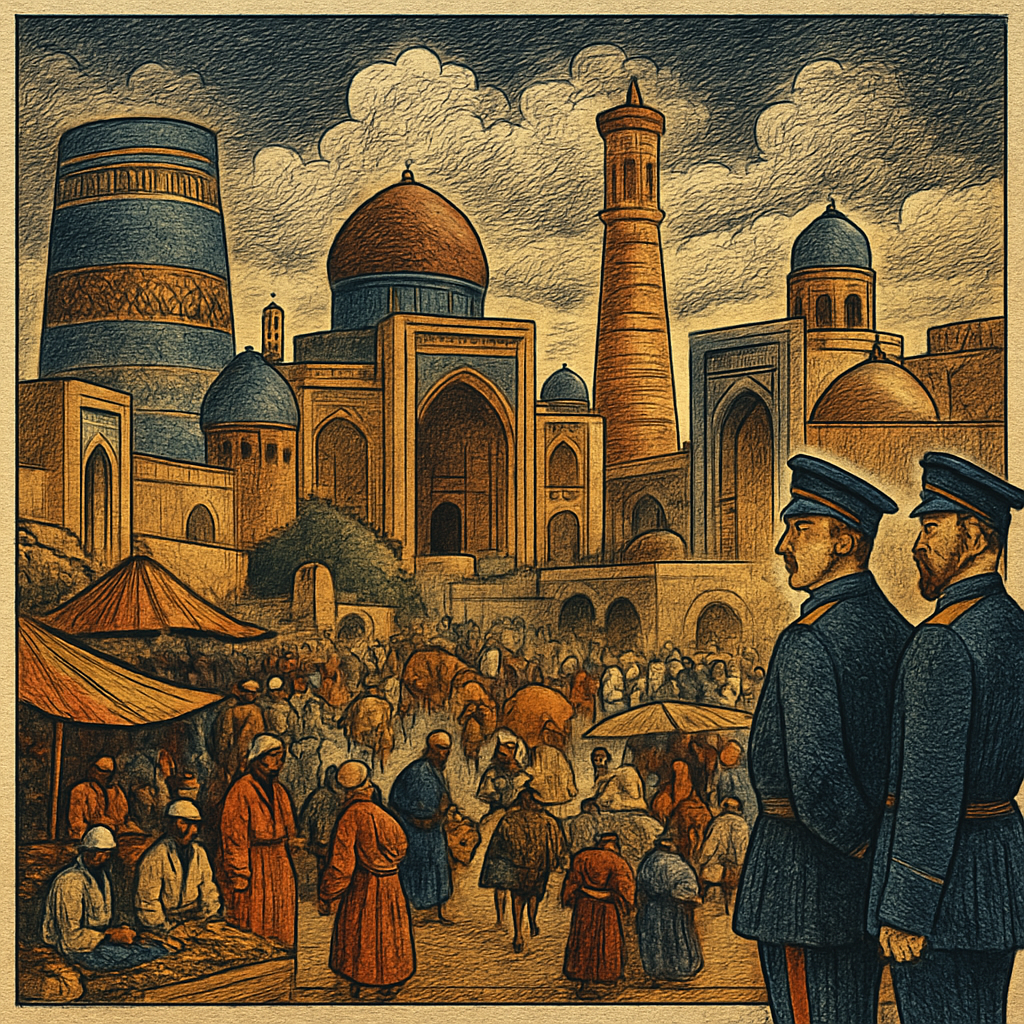
The Silk Road, an ancient network of trade routes connecting East and West, was not only a conduit for spices, silk, and precious metals but also a melting pot of cultures, languages, and traditions. Central Asia, strategically positioned along this historic artery, witnessed the rise and fall of numerous khanates and later Soviet republics, each leaving behind a unique postal heritage. The stamps issued by these entities serve as miniature windows into their complex history, political shifts, and cultural identities.
Historical Context: Central Asia’s Political Landscape in the Early 20th Century
Before the establishment of Soviet rule, Central Asia comprised several semi-autonomous khanates and emirates, such as Khiva, Bukhara, and Kokand. These regions maintained intricate relations with the Russian Empire, which gradually extended its influence during the 19th century. The tumultuous years following the Russian Revolution of 1917 led to the dissolution of these traditional power structures and the formation of Soviet republics that attempted to integrate diverse ethnic groups under a centralized socialist government.
The Khanates and Their Early Postal Systems
The khanates of Central Asia developed their postal systems to facilitate communication within their territories and with neighboring regions. However, their postal services were often rudimentary compared to European standards. Early stamps from these khanates are exceptionally rare and valuable to philatelists due to their limited print runs and the fragile political conditions under which they were produced.
- Emirate of Bukhara: One of the most notable issuers, Bukhara introduced its first postage stamps in 1913. These stamps often featured intricate Arabic calligraphy and heraldic symbols reflecting Islamic heritage.
- Khanate of Khiva: Khiva’s postal issues were similarly scarce and characterized by unique local motifs and inscriptions in Persian script.
- Kokand: Although less prolific, Kokand’s postal issues provide valuable insights into regional autonomy before Soviet consolidation.
The Soviet Era: Integration and Cultural Revival Through Stamp Issues
With the Soviet Union’s expansion into Central Asia, postal systems were overhauled to align with Soviet standards. The new republics—Turkmenistan, Uzbekistan, Tajikistan, Kazakhstan, and Kyrgyzstan—began issuing stamps that reflected socialist realism, industrial progress, and the Soviet narrative of modernization.
Early Soviet Stamp Issues: Symbols of Transformation
Initial Soviet stamp issues from Central Asia featured motifs celebrating collectivization, education, and technological advancement. These stamps were instrumental in disseminating socialist ideology to a traditionally nomadic and agrarian population.
Cultural Revival and National Identity in Stamp Design
Despite Soviet centralization, the 1930s and later decades saw a cautious revival of local cultural elements within stamp designs. This included traditional costumes, historic architecture, and folklore, subtly reinforcing national pride while maintaining loyalty to the USSR. These stamps serve as artifacts of a delicate balance between cultural expression and political conformity.
Collecting Stamps of the Silk Road Republics: Tips and Insights
Philatelists with an interest in Central Asian stamps encounter both challenges and rewards. The rarity, historical depth, and artistic diversity of these issues make them prized possessions, but their acquisition requires careful research and authentication.
Identifying Authentic Early Issues
Due to political instability and the scarcity of documentation, many forgeries and reprints exist. Collectors should consult specialized catalogs and seek expert verification, especially for pre-Soviet khanate issues.
Understanding Historical Context Enhances Value
Knowledge of the region’s history enriches the collecting experience. For example, understanding the significance of the Emirate of Bukhara’s 1913 issues or the cultural symbolism embedded in Soviet-era designs deepens appreciation and may increase investment potential.
Preservation and Display Recommendations
- Store stamps in controlled environments to prevent damage from humidity and light.
- Use archival-quality materials for mounting and framing to preserve colors and paper integrity.
- Consider handcrafted framed stamp displays that highlight the unique artistry and history of Silk Road republics’ stamps, making them both collectible and decorative.
Interesting Anecdotes from the Silk Road Postal History
One fascinating story involves a 1920s Uzbek stamp commemorating the ancient city of Samarkand. Issued during a period of Soviet consolidation, it subtly incorporated Persian calligraphy alongside Soviet iconography, symbolizing a bridge between past and present. This duality reflects the broader cultural negotiation occurring in Central Asia at the time.
Another notable anecdote concerns the use of overprinted Russian stamps during transitional periods when local postal authorities lacked resources to produce their own. These overprints are highly sought after for their rarity and historical significance, illustrating the region’s evolving governance.
The Legacy of Central Asia’s Postal Heritage Today
Today, the stamps of the Silk Road republics stand as testament to a region that has long been a crossroads of civilizations. They narrate stories of empires, revolutions, and cultural resilience. For historians and philatelists alike, these miniature artworks offer unique perspectives on Central Asia’s forgotten postal heritage and its role in the broader narrative of world history.
Modern Central Asian nations continue to issue stamps that celebrate their rich cultural heritage and historical milestones, bridging the past with the present. Collecting and studying these stamps invites enthusiasts to explore the fascinating interplay between geography, politics, and art along one of history’s most legendary trade routes.
Visual Summary — Article in Motion
Conclusion
The stamps issued by the Silk Road republics encapsulate the dynamic history of Central Asia, from the khanates’ independent traditions to Soviet integration and cultural revival. These miniature relics provide invaluable insights into the region’s political upheavals, social transformations, and enduring heritage. For collectors and historians, they offer a compelling journey into a rich yet often overlooked chapter of philatelic and cultural history.