Watch the video
The Silk Road: A Historical Overview
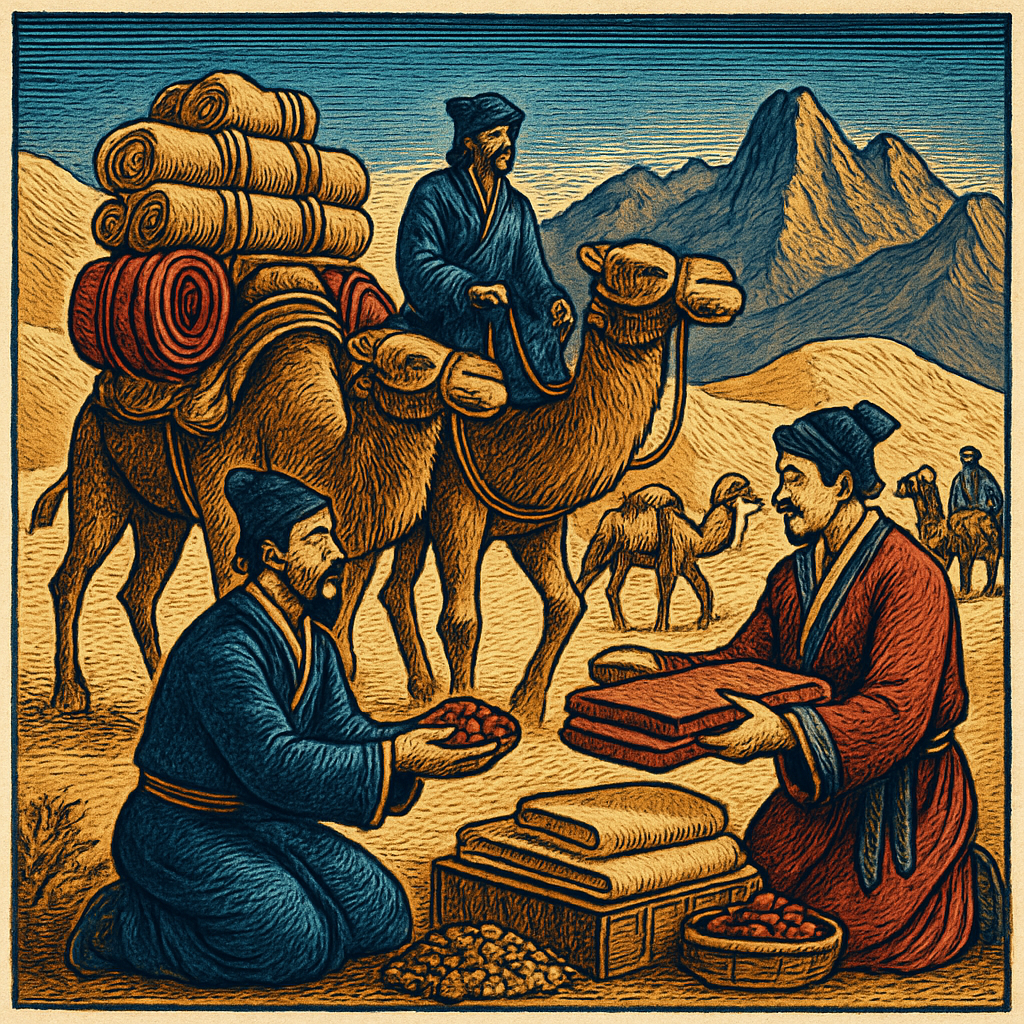
The Silk Road stands as one of the most significant trade networks in human history, linking the East and West across thousands of miles. Originating around 130 BCE during the Han Dynasty of China, this ancient network of trade routes facilitated the exchange of silk, spices, precious metals, and ideas between Asia, Central Asia, and Europe. The name “Silk Road” was coined in the 19th century by the German geographer Ferdinand von Richthofen, highlighting silk as a prized commodity that symbolized the cultural and commercial exchanges on these routes.
Spanning from the ancient Chinese capital of Chang’an (modern Xi’an) to the Mediterranean ports, the Silk Road was not a single road but a complex web of land and maritime routes. These routes enabled the spread of religions such as Buddhism, Christianity, and Islam, alongside technological innovations like papermaking and gunpowder.
Philatelic Commemoration of the Silk Road
Stamps serve as miniature windows into history, culture, and geography. Countries along the Silk Road have issued numerous philatelic stamps commemorating this ancient trade network, celebrating its historical significance and cultural exchanges. These issues not only honor the past but also foster a deeper understanding of shared heritage among nations.
China’s Tribute to the Silk Road
China, as the eastern terminus of the Silk Road, has produced several stamp series highlighting the route’s importance. Early stamps from the People’s Republic of China in the 1950s and later commemorative issues have depicted silk production, caravans, ancient cities like Dunhuang, and the famed Terracotta Army near Xi’an.
An interesting anecdote involves the 1990 “Silk Road” stamp series, which showcased traditional costumes and historic landmarks along the routes. These stamps were widely circulated and remain popular among collectors for their vibrant designs and cultural symbolism.
Central Asian Countries and Their Philatelic Homage
With the breakup of the Soviet Union, newly independent Central Asian republics such as Kazakhstan, Uzbekistan, and Kyrgyzstan began issuing stamps celebrating their Silk Road heritage. Uzbekistan’s 1993 stamp series illustrated the ancient city of Samarkand, a vital Silk Road hub, featuring its iconic Registan Square and mausoleums.
Kazakhstan’s stamps often include images of traditional yurts, caravans, and rare Silk Road artifacts uncovered in archaeological sites. These stamps not only commemorate the trade routes but also highlight the diverse ethnic cultures that thrived along the path.
Persian and Middle Eastern Stamps Reflecting Silk Road Legacies
Iran (ancient Persia) played a pivotal role in Silk Road trade, bridging East and West. Iranian stamps frequently depict historic caravanserais—roadside inns that provided shelter for travelers and merchants. The 1974 series honoring Persian art and architecture also subtly references Silk Road influences through intricate tile patterns and calligraphy.
Similarly, countries like Turkey and Syria have issued stamps showcasing the cities of Anatolia and Mesopotamia, underscoring their strategic roles in Silk Road commerce and cultural diffusion.
European Reflections on the Silk Road in Philately
While Europe was the western terminus of Silk Road trade, European nations have also honored the route in their stamps. For example, Italy issued stamps commemorating Marco Polo’s journey along the Silk Road in 1995, highlighting the Venetian explorer’s role in opening East-West dialogue during the 13th century.
Russia’s philatelic issues often emphasize the role of the Silk Road in connecting Siberia and Central Asia, featuring images of historic cities like Samara and Orenburg, which served as gateways for trade caravans.
Collector Tips for Silk Road Stamps
- Identify Key Themes: Focus on stamps portraying caravans, ancient cities, cultural artifacts, and historic figures related to the Silk Road to build a thematic collection.
- Explore Diverse Geographies: Since the Silk Road spans multiple countries, broaden your search to include stamps from China, Central Asia, the Middle East, and Europe to capture the route’s full narrative.
- Seek Limited Editions and First Day Covers: Special commemorative issues, first day covers, and souvenir sheets often have added historical context and higher collector value.
- Use Philatelic Catalogs and Online Resources: Consult specialized catalogs such as Scott, Michel, or Stanley Gibbons for detailed information and valuation of Silk Road stamps.
- Preserve Cultural Context: Reading about the history behind each stamp enriches the collecting experience, transforming it from mere accumulation to a journey through time.
Interesting Anecdotes and Historical Facts
- Silk Was Not the Only Commodity: While silk was the most famous good, traders also exchanged spices, precious stones, glassware, and even ideas like papermaking and religious beliefs.
- Marco Polo’s Legacy: The Venetian explorer’s travels along the Silk Road in the late 13th century introduced Europe to Asian wonders, inspiring generations of explorers and traders.
- Caravanserais as Ancient Motels: These roadside inns were crucial for the safety and rest of merchants and animals, often becoming cultural melting pots where languages and traditions blended.
- Philatelic Commemorations Foster Cross-Cultural Understanding: Stamps dedicated to the Silk Road serve as diplomatic gestures, highlighting shared heritage and encouraging cultural exchange in the modern era.
The Modern Silk Road and Its Philatelic Representation
Today’s “New Silk Road” initiative, such as China’s Belt and Road Initiative (BRI), aims to revive and modernize trade routes across Eurasia. This contemporary development has inspired recent stamp issues celebrating renewed connectivity and cooperation among Silk Road countries.
For example, in 2017, China and Kazakhstan jointly released stamps commemorating the BRI, featuring futuristic imagery alongside traditional Silk Road motifs. Such philatelic collaborations underscore the ongoing importance of these routes in global trade and cultural diplomacy.
Caring for Silk Road Stamp Collections
Preserving delicate stamp issues depicting Silk Road heritage requires proper care to maintain their condition and value over time. Collectors should consider the following tips:
- Store stamps in acid-free albums or stock books to prevent discoloration and damage.
- Handle stamps with stamp tongs to avoid oils and dirt from fingers.
- Keep collections away from direct sunlight and humidity, which can cause fading and mold.
- Consider framing select stamps in handcrafted displays for both protection and aesthetic appreciation, available from premium suppliers like Obelisk Stamps.
Visual Summary — Article in Motion
Conclusion
The Silk Road’s enduring legacy is beautifully captured through philatelic issues spanning continents and centuries. Stamps commemorating this ancient trade network offer collectors a unique gateway into the history of cultural exchange, commerce, and human connection. Whether you are a seasoned philatelist or a history enthusiast, exploring Silk Road stamps enriches your appreciation of how the past continues to influence the present.