Watch the video
Introduction to Indigenous Representation on Latin American Stamps
Stamps are more than just postage; they are miniature windows into the cultural, political, and social landscapes of nations. In Latin America, a region rich with indigenous heritage and complex histories, postage stamps have played a unique role in reflecting the evolving narratives around indigenous peoples. From early colonial-era depictions to contemporary celebrations of indigenous identity, Latin American stamps tell a story of marginalization, resilience, and recognition.
This article explores the hidden histories behind indigenous representation on Latin American stamps, highlighting how these small pieces of paper have been used to acknowledge cultural diversity, promote political change, and celebrate indigenous contributions to national identity.
Historical Context: Colonial Legacies and Early Stamp Depictions
Latin America’s colonial past significantly shaped the portrayal of indigenous peoples in official state symbolism, including postage stamps. During the 19th and early 20th centuries, when many Latin American countries first issued stamps, indigenous cultures were often marginalized or depicted through exoticized and stereotypical images.
The Role of Colonial Imagery
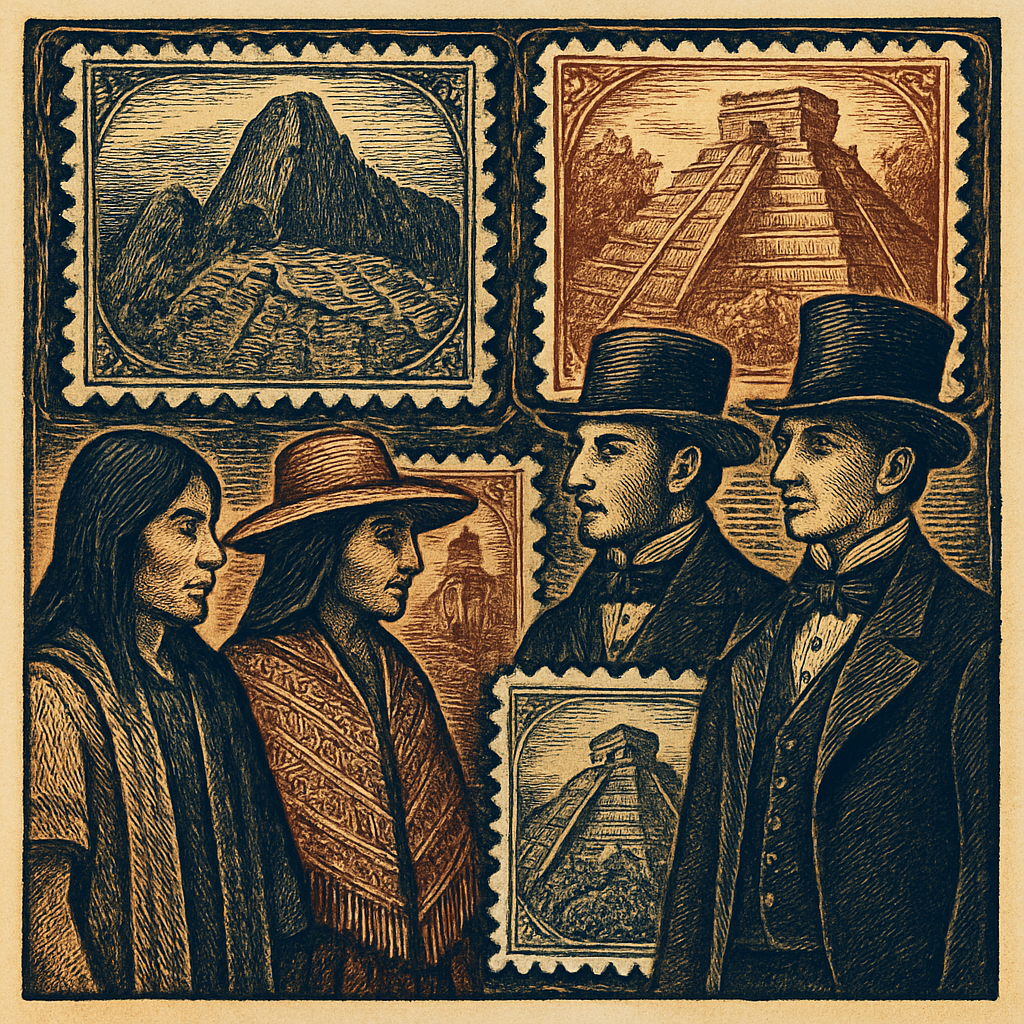
Early stamps commonly emphasized indigenous peoples as part of an “exotic” landscape—distinct from the European-descended majority who dominated political power. For example, stamps might feature indigenous individuals in traditional dress or portray archaeological sites such as Machu Picchu or the Mayan pyramids, but without contextualizing indigenous peoples as living cultures with ongoing significance.
This approach reflected broader societal attitudes of the time, where indigenous communities were often viewed as relics of the past, disconnected from modern nation-building efforts. Such imagery reinforced colonial narratives that marginalized indigenous identities and histories.
Examples from Early Issues
- Mexico: The 1923 “Alegoría de la Independencia” series included symbolic indigenous motifs, yet indigenous peoples were rarely the direct focus.
- Peru: Early stamps featured iconic Incan sites and artifacts, such as the Intihuatana stone at Machu Picchu, emphasizing archaeological heritage rather than living indigenous cultures.
- Guatemala: Initial issues depicted Mayan ruins and artifacts, reinforcing an image of Mayan civilization as a historical monument rather than a contemporary identity.
Shift Toward Recognition: Mid-20th Century Changes
The mid-20th century marked a turning point in how Latin American postage stamps portrayed indigenous peoples. Amid growing indigenous rights movements, decolonization discourse, and cultural revitalization efforts, stamps began to reflect a more respectful and inclusive representation.
Political and Cultural Awakening
Post-World War II Latin America saw increased calls for social justice and the recognition of marginalized groups. Governments started to recognize indigenous peoples as integral to national identity, not merely as historical curiosities. This shift was evident in philatelic issues that began portraying indigenous leaders, traditional clothing, festivals, and languages.
Notable Stamp Issues
- Bolivia: In 1950, Bolivia issued stamps commemorating the Aymara and Quechua peoples, highlighting indigenous participation in national history.
- Ecuador: The 1960s saw stamps featuring indigenous artisans and traditional crafts, underscoring cultural continuity.
- Chile: Stamps began to depict Mapuche leaders and symbols, acknowledging ongoing indigenous struggles and heritage.
Modern Portrayals: Celebrating Indigenous Identity and Rights
In recent decades, Latin American countries have increasingly used postage stamps as platforms to celebrate indigenous cultures, promote linguistic diversity, and advocate for indigenous rights. These issues often coincide with significant cultural anniversaries, political milestones, or United Nations declarations.
Incorporating Indigenous Voices and Symbols
Modern stamp designs frequently involve collaboration with indigenous communities, ensuring authenticity and respect. The inclusion of indigenous languages, traditional art styles, and contemporary indigenous figures reflects a more dynamic and empowered representation.
Examples of Contemporary Indigenous-Themed Stamps
- Mexico: The 2010 series commemorating the International Year of Indigenous Languages showcased indigenous scripts and cultural expressions.
- Peru: Recent issues have celebrated the Quechua and Aymara New Year festivals, emphasizing living traditions.
- Guatemala: Stamps honoring Mayan leaders and activists highlight the ongoing struggle for indigenous rights and visibility.
Impact on Cultural Recognition and Political Change
Stamps serve not only as cultural ambassadors but also as tools for political messaging. By featuring indigenous peoples prominently, Latin American postal authorities contribute to broader efforts toward reconciliation, cultural preservation, and social inclusion.
This philatelic recognition often parallels legislative advances, such as constitutional reforms acknowledging indigenous autonomy, land rights, and bilingual education. Stamps thus become part of a larger narrative of empowerment and acknowledgement.
Collector Insights: Appreciating Indigenous-Themed Latin American Stamps
For philatelists, indigenous-themed stamps from Latin America offer rich opportunities to explore history, art, and social change. Collectors should consider several factors when seeking these issues.
Tips for Collecting Indigenous Stamps
- Research Historical Context: Understanding the background enhances appreciation. For example, knowing the significance of a Mapuche leader featured on a Chilean stamp adds depth.
- Focus on Authenticity: Look for stamps issued by official postal authorities, and be cautious of forgeries or unauthorized issues.
- Explore Thematic Collections: Many collectors organize stamps by themes such as indigenous art, languages, or festivals, which can make assembling collections more engaging.
- Condition and Rarity: As with all philately, condition matters. Early issues or limited commemoratives may hold higher value.
- Attend Exhibitions and Auctions: Specialized stamp exhibitions often showcase indigenous-themed issues, providing educational and networking opportunities.
Interesting Anecdotes and Cultural Highlights
Latin American stamps have sometimes sparked controversies or fascinating stories related to indigenous representation. For instance, a 1998 Bolivian stamp featuring the Aymara language faced debate over language standardization, highlighting the complexities of cultural preservation.
In Mexico, stamps celebrating the Day of the Dead often include indigenous symbolism, illustrating how indigenous traditions have been woven into national celebrations.
These anecdotes reveal how postage stamps can be focal points for dialogue about identity, history, and cultural pride.
Visual Summary — Article in Motion
Conclusion
The journey of indigenous peoples’ representation on Latin American stamps reflects broader societal transformations—from marginalization rooted in colonial legacies to vibrant celebrations of cultural identity and rights. These stamps serve as powerful symbols of recognition, education, and pride, inviting both collectors and the public to appreciate the rich indigenous heritage that shapes Latin America.
By exploring and collecting these philatelic treasures, enthusiasts contribute to preserving and honoring the diverse narratives that define the region’s past and present.