Watch the video
Introduction to the Evolution of Global Postal Systems
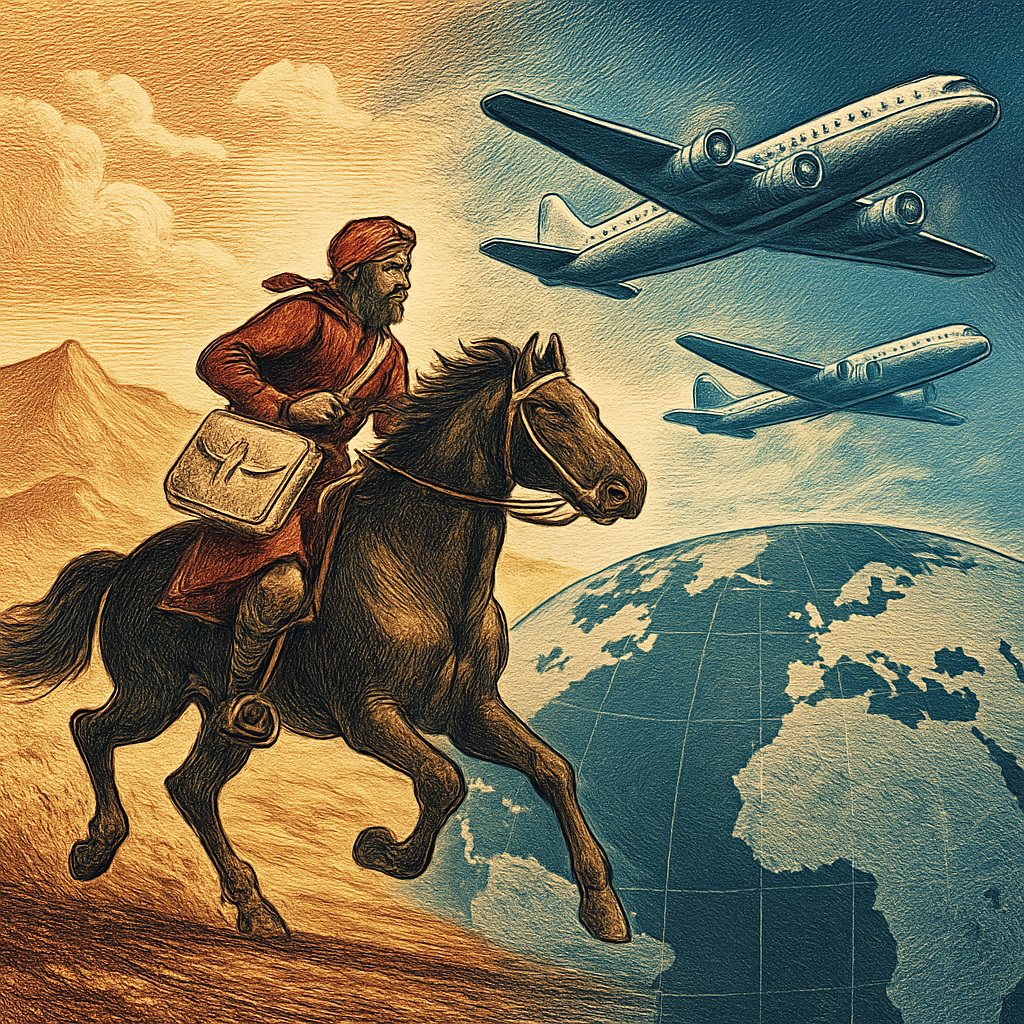
The history of global postal systems is a fascinating journey that mirrors the evolution of human communication itself. From the early days when messages were carried on horseback to the revolutionary advent of airmail, postal services have continually adapted and expanded to meet the needs of an increasingly interconnected world. These systems have not only facilitated personal and commercial correspondence but have also played a critical role in shaping societies by enabling faster dissemination of information.
Early Postal Systems: The Roots of Communication
The concept of organized mail delivery dates back thousands of years. Ancient civilizations such as Egypt, Persia, and Rome established rudimentary postal routes to maintain administrative control and facilitate governance.
Ancient Messengers and Relay Stations
One of the earliest known postal systems was developed by the Persian Empire under King Cyrus the Great around 550 BCE. The Royal Road, stretching over 2,500 kilometers, featured relay stations where mounted couriers could rest and exchange horses, allowing messages to travel swiftly across vast distances.
Similarly, the Romans refined this system with the Cursus Publicus, an imperial courier service that used horses and carriages to deliver official correspondence throughout the empire. These early networks laid the groundwork for future postal services by emphasizing speed, reliability, and organization.
Stagecoaches and the Expansion of Postal Routes
With the decline of ancient empires, postal systems fragmented but were revitalized during the Middle Ages, particularly in Europe. The introduction of stagecoach routes in the 16th and 17th centuries marked a significant advancement. Stagecoaches, horse-drawn vehicles traveling on established roads, were used to transport mail and passengers between cities.
One notable example is the English Royal Mail, formally established in 1516 by King Henry VIII. It initially served the monarchy and government officials but gradually expanded to the public. Stagecoach postal services improved the reliability and reach of mail delivery, often operating on fixed schedules that increased predictability for users.
The Industrial Revolution and Postal Innovations
The 18th and 19th centuries brought transformative changes to postal systems worldwide, largely driven by technological and infrastructural advancements.
The Penny Post and Universal Postal Union
In 1840, the United Kingdom introduced the Penny Black, the world’s first adhesive postage stamp. This innovation revolutionized mail by standardizing postage rates and simplifying payment processes. The concept quickly spread globally, encouraging the development of systematic postal services accessible to the general population.
Furthermore, the establishment of the Universal Postal Union (UPU) in 1874 was a milestone in global communication. It standardized international mail exchange rules and rates, facilitating seamless cross-border correspondence. The UPU remains a vital organization coordinating postal services among member countries to this day.
Railways and Telegraphs: Speeding Up Communication
The expansion of railway networks dramatically accelerated mail delivery in the 19th century. Mail trains could transport large quantities of letters and parcels swiftly over long distances, connecting rural areas with urban centers.
Simultaneously, the telegraph introduced near-instantaneous transmission of messages, complementing traditional mail. While telegraphs conveyed short communications, postal systems continued to handle longer letters, parcels, and official documents. Together, these technologies created a versatile communication infrastructure.
The Birth and Growth of Airmail
The 20th century ushered in the era of aviation, fundamentally transforming postal services through the introduction of airmail.
Early Airmail Flights and Their Impact
The first official airmail flight occurred in 1911 in India, when pilot Henri Pequet transported approximately 6,500 letters over a distance of 13 kilometers between Allahabad and Naini. This pioneering effort demonstrated the potential of aircraft to overcome geographical challenges and reduce delivery times.
During World War I, military needs accelerated the development of aviation technology and infrastructure, which later benefited commercial airmail services. By the 1920s and 1930s, many countries had established regular airmail routes, linking continents and improving global communication.
Iconic Airmail Stamps and Collecting Culture
Airmail stamps became a distinctive category within philately, often featuring images of airplanes, globes, and speed motifs. Collectors prize these stamps not only for their artistic designs but also for their historical significance in marking aviation milestones.
For instance, the United States issued the famous 1918 “Inverted Jenny” airmail stamp, which is one of the rarest and most valuable stamps in the world due to a printing error. Such stamps tell the story of airmail’s evolution and the broader narrative of technological progress.
Modern Postal Systems: Digital Integration and Global Reach
Today’s postal services operate in a digital era, integrating traditional mail with electronic communication and advanced logistics.
From Handwritten Letters to Hybrid Mail
While handwritten letters remain cherished, many postal services now offer hybrid mail solutions, where electronic messages are printed and delivered physically, or physical mail is scanned and sent digitally. This fusion enhances efficiency while preserving the tactile experience of mail.
Challenges and Innovations in the 21st Century
Postal systems face challenges including declining letter volumes due to email and mobile communication, increased competition from private courier services, and the demand for faster parcel deliveries driven by e-commerce.
In response, many postal operators have invested in automation, tracking technologies, and sustainable delivery methods such as electric vehicles and drones. These innovations aim to maintain the relevance of postal services in a rapidly changing communication landscape.
Collector Tips: Preserving Postal History
For stamp and postal history enthusiasts, understanding the evolution of postal systems enriches the collecting experience. Here are some tips:
- Focus on Thematic Collections: Collect stamps and covers related to specific milestones, such as airmail flights or stagecoach routes, to create a narrative-driven collection.
- Preserve Historical Context: Seek postal artifacts with clear postmarks, flight cachets, or route markings that provide insights into the mail’s journey.
- Research Provenance: Use catalogs and historical records to verify the authenticity and significance of items, enhancing their value and educational worth.
- Invest in Proper Storage: Use acid-free albums and protective sleeves to prevent damage and preserve colors.
Visual Summary — Article in Motion
Conclusion
The journey from horseback couriers to airmail planes exemplifies human ingenuity in overcoming barriers to communication. Postal systems have continually evolved, shaping and reflecting societal changes over centuries. Today, as we embrace digital communication, the legacy of these systems endures, offering rich stories and treasured collectibles for enthusiasts worldwide.