Watch the video
Social and Political Climate Leading to the 1968 Martin Luther King Jr. Stamp
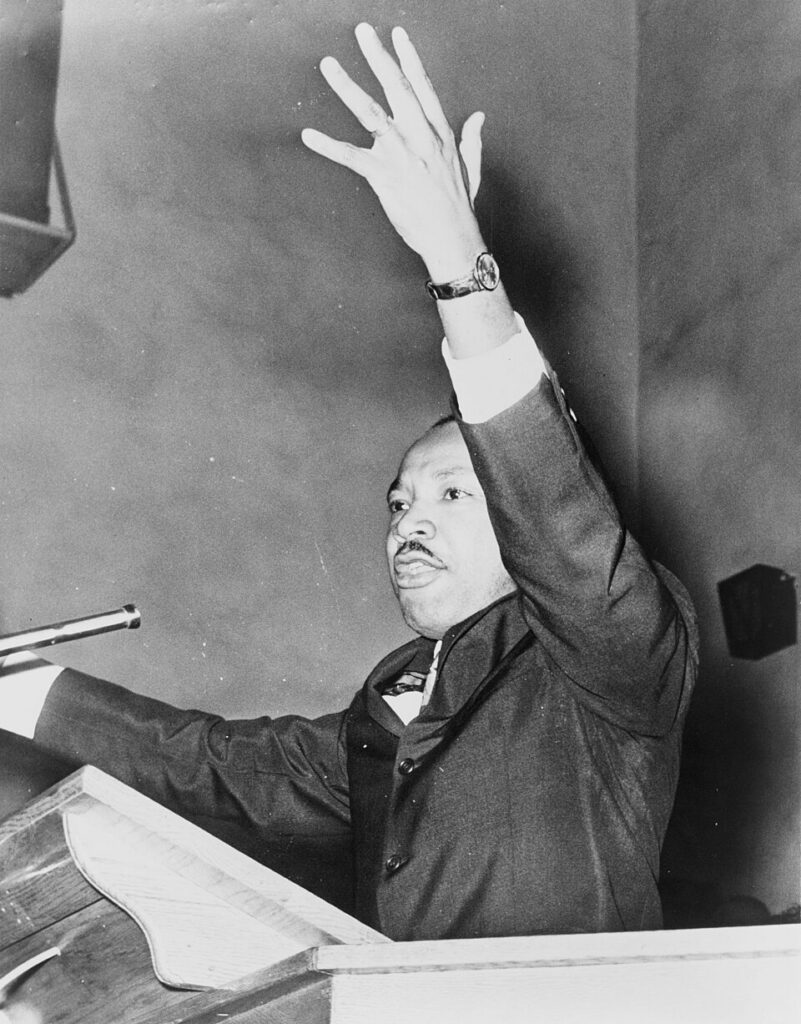
The release of the first Martin Luther King Jr.[1] stamp in 1968 was a watershed moment in the history of American postage and the nation’s collective memory. Coming just months after the tragic assassination of Dr. King on April 4, 1968, the stamp was not merely a commemorative artifact but a poignant symbol of the ongoing Civil Rights Movement and the struggle for racial equality. The 1960s in the United States were a decade marked by profound social upheaval, with the Civil Rights Movement at its heart. Dr. King’s leadership in nonviolent protest against segregation and racial injustice had galvanized millions, but his death also left a nation grappling with grief and unresolved tensions.
The political atmosphere was charged. The assassination triggered riots in over 100 cities, highlighting the depth of racial unrest. In this volatile context, the U.S. government’s decision to issue a postage stamp honoring Dr. King was both a tribute and a political statement. It was the first time an African American was commemorated on a U.S. postage stamp, reflecting a significant shift in the official recognition of African American contributions to American history and culture.
Design and Release of the 1968 Martin Luther King Jr. Stamp
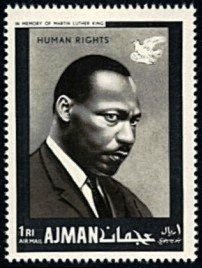
The stamp was issued on November 16, 1968, in Washington, D.C., less than eight months after Dr. King’s assassination. Designed by the artist Charles R. Chickering, the 6-cent stamp features a dignified portrait of King superimposed over a symbolic depiction of the Lincoln Memorial. This design choice connected King’s legacy to the ideals of freedom and equality embodied by Abraham Lincoln, underscoring the ongoing pursuit of civil rights in America.

Charles Chickering was a respected stamp designer and engraver, known for his ability to convey profound narratives through limited space. The stamp’s simplicity and solemnity were deliberate, aimed at conveying respect and reverence for Dr. King’s life and message. The 6-cent denomination corresponded to the standard first-class postage rate at the time, meaning the stamp would be widely used, helping to circulate Dr. King’s image and legacy throughout the country.
Vivid Anecdote: The Stamp Dedication Ceremony
The dedication ceremony in Washington was a historic event attended by prominent civil rights leaders, politicians, and members of King’s family. Coretta Scott King, Dr. King’s widow, played a central role in the ceremony, expressing hope that the stamp would inspire future generations. The ceremony was broadcast nationally, further embedding the image of Dr. King into the American consciousness. This public commemoration via postage was a pioneering act, as the postal service had previously avoided political controversy by steering clear of contentious contemporary figures.
The Stamp’s Impact on American Memory and Civil Rights Symbolism
The issuance of the Martin Luther King Jr. stamp became a powerful tool in shaping public memory of the Civil Rights Movement. It signaled official recognition of the movement’s legitimacy and the nation’s commitment to Dr. King’s ideals. For many Americans, the stamp was an accessible reminder of the ongoing struggle for racial equality, carried daily through personal correspondence and official mail.
Philatelists and historians alike recognize the 1968 MLK stamp as a milestone in American postal history. Its release coincided with significant legislative achievements, including the Fair Housing Act passed in April 1968, which sought to address housing discrimination. The stamp helped to cement Dr. King’s status as a national hero and a symbol of peaceful resistance.
Practical Tip for Collectors: Identifying First Day Covers and Variants
For enthusiasts and collectors, first day covers (FDCs) from the stamp’s November 16, 1968, release ceremony are highly prized. These covers often feature special cancellations from Washington, D.C., and sometimes include artwork or inscriptions related to Dr. King’s legacy. Authenticating these FDCs requires attention to the postmark date and origin. Additionally, presentation folders and souvenir sheets from this release offer rich contextual information and are valuable additions to any civil rights philatelic collection.
Legacy and Influence on Subsequent Civil Rights Commemorations
The 1968 Martin Luther King Jr. stamp set a precedent for the U.S. Postal Service to honor civil rights leaders and themes more frequently. It opened the door for subsequent stamps commemorating figures such as Rosa Parks, Malcolm X, and Harriet Tubman. Moreover, the stamp’s issuance during a period of turbulent racial dynamics demonstrated a willingness to use postage as a medium for national dialogue and healing.
By integrating Dr. King’s image into everyday life, the stamp helped normalize the presence of African American heroes in national iconography. It also inspired other countries to issue stamps honoring civil rights leaders, contributing to a global recognition of the movement’s significance. Today, the 1968 MLK stamp remains a powerful symbol of America’s ongoing journey toward equality and justice.
Vivid Anecdote: The Stamp’s Role in Schools and Education
In the years following the stamp’s release, educators incorporated it into lessons about civil rights and American history. One notable example occurred in 1971 when a fifth-grade class in Atlanta used the MLK stamp to launch a pen-pal project focused on social justice themes. This grassroots educational use exemplifies how postage stamps can transcend their functional role to become catalysts for learning and empathy.
Conclusion
The 1968 Martin Luther King Jr. postage stamp is much more than a collectible; it is a testament to a pivotal moment in American history. Issued in the immediate aftermath of Dr. King’s assassination, it reflects the nation’s grief, hope, and commitment to civil rights. Through its design, release, and widespread circulation, the stamp contributed significantly to the shaping of American collective memory and the ongoing recognition of the Civil Rights Movement. For philatelists and historians alike, it represents how postage stamps serve as intimate visual narratives that capture profound social and political currents.
Visual Summary — Article in Motion
References
- United States Postal Service, "Martin Luther King Jr. Stamp, 1968", USPS Archives, 1968 https://about.usps.com/who-we-are/postal-history/mlk-stamp-1968.pdf