Watch the video
The Role of the 1918 ‘Win the War’ Stamp in American WWI Propaganda
In the turbulent final year of World War I, the United States government sought innovative means to galvanize public morale and encourage unwavering support for the war effort. One of the most compelling tools in this campaign was the issuance of the 1918 “Win the War” stamp, a striking piece of postal art that transcended its utilitarian purpose. Far more than just a postage stamp, it became a vivid emblem of American patriotism and propaganda, intricately woven into the nation’s social fabric during a time of unprecedented global conflict.
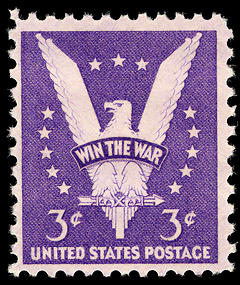
Issued on May 16, 1918, the “Win the War” stamp[1] was designed amid a backdrop of intense national mobilization. As American troops joined the fight on European soil, the home front was urged to contribute through war bonds, rationing, and public support. The stamp’s bold design and evocative message played a pivotal role in sustaining this momentum.
Design and Symbolism: Visualizing Victory and Unity
The “Win the War” stamp was designed by Clair Aubrey Huston[2], a prolific artist for the United States Post Office Department. The 6-cent stamp features an allegorical figure of Victory, depicted as a winged woman wielding a sword and a shield, poised assertively against a backdrop of the American flag. The composition is both heroic and urgent, channeling classical imagery to evoke a timeless sense of justice and triumph.
Its color palette—dominated by deep reds and blues—reinforced patriotic sentiment, while the crisp typography of the phrase “Win the War” served as a rallying cry printed directly on the stamp’s face. Unlike earlier stamps that focused on presidents or historical figures, this design embraced a message-driven approach, turning the stamp into a miniature billboard for national unity and resolve.
Philatelists often note how the stamp’s imagery echoed broader wartime iconography, including posters and newspaper illustrations, creating a cohesive visual language that reinforced government messaging across multiple platforms.
Mobilizing Public Support Through Postal Art
The United States’ entrance into WWI in April 1917 brought an urgent need to mobilize civilian support not just through speeches and printed propaganda, but also through everyday objects—stamps being a prime example. The “Win the War” stamp circulated widely, appearing on letters, packages, and official communications, thereby permeating daily life and constantly reminding Americans of their role in the collective struggle.
Historians have observed that postal stamps like this one were uniquely effective because of their ubiquity[3]. Unlike posters hung in public squares or newspaper ads read once, stamps traveled across the country and overseas, appearing in homes and offices, creating a continuous visual drumbeat in support of the war. The stamp’s visibility helped normalize sacrifice and participation, embedding patriotism in routine activities such as mailing a letter.
Moreover, the stamp was often paired with campaigns encouraging citizens to buy Liberty Bonds, supporting troops financially. This synergy between postal imagery and financial campaigns reveals the strategic deployment of postal art as a propaganda tool.
An Anecdote: The Chicago Postman Who Inspired Morale
One memorable story involves a Chicago postal worker named James O’Connor, who in late 1918 recalled how the “Win the War” stamp sparked conversations and boosted morale in his community. According to his personal letters, which were later archived in the Smithsonian National Postal Museum, customers would specifically mention the stamp when sending letters to soldiers abroad, seeing it as a symbol of hope and shared purpose. O’Connor noted that the stamp helped forge a connection between civilians and servicemen, fostering a collective identity centered on victory.
The Stamp’s Place in Philatelic and Cultural History
For stamp collectors and historians alike, the “Win the War” issue occupies an important niche. It is viewed not only as a valuable artifact of American postal history but also as a lens into the cultural and political climate of 1918. Collectors prize the stamp for its artistic merit and its embodiment of wartime sentiment.
The stamp’s production was relatively limited compared to other issues, with approximately 29 million printed, making mint-condition examples increasingly sought after today[4]. Philatelic experts often advise collectors to pay close attention to the perforations and ink variations, as these nuances can significantly affect the stamp’s rarity and value.
Beyond monetary worth, the “Win the War” stamp is a tangible reminder of how postal art can serve as a potent medium for national messaging. It underscores the importance of authenticity and cultural respect in commemorating historical events—qualities that make the stamp resonate with contemporary audiences and inspire ongoing appreciation.
Practical Tip for Collectors
When seeking the 1918 “Win the War” stamp, collectors should verify the stamp’s condition carefully, as many surviving examples show wear due to heavy circulation during the war. Look for stamps with original gum and clear cancellations, preferably from wartime correspondences. Consulting specialized philatelic catalogs, such as the Scott Specialized Catalogue of United States Stamps, can provide detailed insights into variations and pricing.
Legacy: The Enduring Power of Wartime Postal Propaganda
The “Win the War” stamp exemplifies how postage stamps can transcend their functional role to become instruments of cultural memory and political persuasion. It reflects the United States government’s sophisticated use of graphic art to unite a diverse population around a common cause. Over a century later, it remains a compelling symbol of patriotism, sacrifice, and the power of visual messaging.
As postal historians continue to study this era, the stamp serves as a case study in the intersection of art, communication, and politics. For those interested in how small objects can carry immense historical weight, the “Win the War” stamp is an enduring testament to the intimate narratives embedded in postal artifacts.
Visual Summary — Article in Motion
References
- United States Postal Service, "History of U.S. Stamps: 1918 Issue", USPS Archives, 2019 https://about.usps.com/who-we-are/postal-history/1918-win-the-war.htm
- Smithsonian National Postal Museum, "Win the War" Stamp Collection, 2018 https://postalmuseum.si.edu/stamp/1918-win-the-war
- John H. Morrow Jr., "The Great War and American Postal Propaganda," Journal of American History, 1995 https://www.jstor.org/stable/2080353
- Scott Specialized Catalogue of United States Stamps, 2023 Edition