Watch the video
Stamps as Instruments of Imperial Authority in the British Raj
During the British Raj, which spanned from 1858 to 1947, postage stamps were far more than mere facilitators of mail delivery. They served as potent visual instruments that projected and reinforced the authority of the British Empire across the Indian subcontinent. The imagery, inscriptions, and design elements carefully chosen for these stamps were deliberate expressions of imperial power, melding political messaging with everyday communication.
The first postage stamps issued specifically for India under British rule appeared in 1854, shortly after the British Crown assumed direct control from the East India Company following the Revolt of 1857. These early stamps prominently featured the profile of Queen Victoria, embodying the monarch’s supreme sovereignty. The use of the Queen’s effigy on stamps was a symbolic assertion that India was part of the vast British Empire, ruled directly by the Crown.
Beyond the Queen’s portrait, stamps incorporated imperial motifs such as the British crown, lions—a symbol of strength and dominion—and heraldic elements derived from the United Kingdom’s coat of arms. These images consistently reinforced the narrative of British supremacy and the ‘civilizing mission’ the colonial administration claimed to undertake.
Imperial Iconography and Its Messages
The choice of imperial iconography on stamps was far from accidental. Postage stamps were circulated widely, reaching even rural villages, making them an effective medium for disseminating imperial ideology. For instance, the 1911 ‘King George V Coronation’ stamps included not only the King’s portrait but also imagery of the Taj Mahal, symbolically linking British rule to India’s rich cultural heritage—albeit under British control.
The use of the monarch’s image on stamps communicated the idea of loyalty and obedience to the Crown. The stamps’ inscriptions, typically in English and often in Persian or Hindi scripts, underscored the colonial administration’s linguistic hierarchy and governance structure.
Indian Perspectives Reflected in Colonial Stamps
While British-issued stamps primarily projected imperial authority, Indian perspectives and cultural identity found subtle, sometimes ambivalent, expression within the postal issues of the British Raj. Indian princely states, which retained varying degrees of autonomy under British suzerainty, issued their own stamps, often reflecting indigenous symbols, languages, and rulers.
For example, the princely state of Jaipur issued stamps featuring traditional motifs and inscriptions in local scripts, emphasizing regional identity and sovereignty. These issues served as a nuanced counterpoint to the imperial imagery dominating British Indian stamps.
Emergence of Nationalist Sentiments in Stamp Design
As the Indian independence movement gained momentum in the early 20th century, the role of stamps as vehicles of imperial propaganda was challenged by growing nationalist consciousness. Although the British government maintained strict control over official postal issues, subtle shifts began to appear.
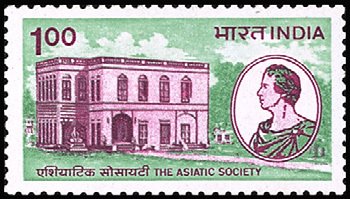
One notable anecdote involves the 1929 issue commemorating the centenary of the Asiatic Society in Calcutta. The stamp depicted Indian scholars alongside British figures, symbolizing a shared intellectual heritage. While still under colonial auspices, such imagery acknowledged Indian contributions and subtly validated Indian identity.
Moreover, Indian nationalists sometimes used unofficial or ‘cinderella’ stamps to propagate their messages. In 1920, the “Indian National Congress” produced unofficial stamps featuring nationalist symbols like the spinning wheel (charkha) and images of Mahatma Gandhi. Though these were not valid for postage, they circulated among sympathizers, reflecting how stamps became a medium for political expression beyond official channels.
Case Study: The 1947 Independence Commemorative Stamps
The watershed moment for stamp imagery in India came with independence and partition in 1947. The first stamps issued by independent India departed radically from colonial iconography. The initial independence issue featured the Indian flag, the Lion Capital of Ashoka, and the Devanagari script, signaling a reclaiming of cultural and political identity.
An interesting anecdote from this period involves the designing of these stamps. Artists and officials debated over motifs that would best symbolize a united India’s aspirations. The eventual choice of the Ashoka Pillar—a symbol of Buddhist governance and justice—was a conscious effort to evoke India’s ancient heritage and moral authority distinct from colonial rule.
Practical Tips for Collectors Interested in British Raj Stamps
- Identify Key Issues: Collectors should familiarize themselves with major issues such as the 1854 Queen Victoria stamps, the 1911 King George V series, and princely state issues, which offer rich insights into imperial and regional dynamics.
- Look for Overprints and Variants: Many stamps from princely states or transitional periods have overprints denoting changes in administration or political events. These can be rare and historically significant.
- Research Provenance: Provenance can add depth to a collection. For example, stamps used on letters sent during pivotal events like the 1919 Jallianwala Bagh Massacre aftermath or correspondence involving nationalist leaders can be prized finds.
- Seek Expert Authentication: The market for British Raj stamps includes forgeries, especially of rare issues. Engaging with philatelic experts who specialize in South Asian stamps ensures authenticity.
Visual Summary — Article in Motion
Conclusion
Postage stamps from the British Raj era are far more than collectibles; they are visual narratives encapsulating the complex interplay of imperial authority and emerging Indian identity. The stamps’ imperial imagery projected British power and governance, while Indian princely states and nationalist movements used postal iconography to assert cultural pride and political aspirations. For historians, philatelists, and art lovers alike, these miniature artifacts offer a fascinating window into the colonial experience and the nuanced journey toward independence.