Watch the video
The Dawn of Zeppelin Mail and Its Philatelic Significance
In the early decades of the 20th century, the world witnessed an extraordinary leap in transportation technology: the era of the Zeppelin airship. These massive, rigid airships, pioneered by Count Ferdinand von Zeppelin, not only captivated the public imagination but also revolutionized airmail services. The unique stamps issued for Zeppelin flights stand today as intimate historical artifacts, reflecting the optimism and technological enthusiasm of the interwar period. Through these stamps, philatelists and historians alike gain insight into the evolving relationship between air travel and postal communication.
The Zeppelin: A Marvel of Early 20th-Century Aviation
Count Ferdinand von Zeppelin’s vision materialized in 1900 with the launch of the first successful rigid airship, marking the birth of controlled, long-distance lighter-than-air travel. Unlike balloons, Zeppelins were engineered with a rigid frame that allowed for greater size, control, and payload. Their ability to transport passengers, cargo, and mail across continents opened new horizons for communication and commerce.
The public was enthralled by the Zeppelin’s majestic silhouette and the promise of rapid transcontinental travel. This fascination was mirrored in popular culture, newspapers, and, importantly, postage stamps commemorating these flights.
Zeppelin Flights and the Birth of Specialized Airmail Stamps
The first organized Zeppelin airmail service began in 1919, shortly after World War I. The German government and private postal services collaborated to facilitate mail transport via these airships. This gave rise to the issuance of special Zeppelin stamps and overprints, designed specifically for mail carried aboard these flights.
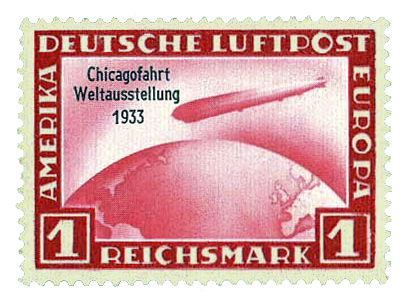
These stamps were not mere functional labels; they were carefully designed visual narratives that celebrated the cutting-edge technology of the day. Often featuring images of the airship itself, these stamps served both as postage and as souvenirs of a remarkable chapter in aviation history.
Notable Zeppelin Stamp Issues and Their Features
- Germany’s 1928 “Graf Zeppelin” Series: One of the most famous Zeppelin stamp issues, these stamps featured the silhouette of the Graf Zeppelin airship with denominations corresponding to various mail rates. The series was issued to commemorate the LZ 127’s transatlantic flights.
- United States 1930 ‘Graf Zeppelin’ Stamp: Released to mark the first American Zeppelin flight, this 65-cent stamp depicted the airship over the globe, symbolizing international connectivity. It was notably the highest denomination U.S. stamp at the time, reflecting the prestige of Zeppelin airmail service.
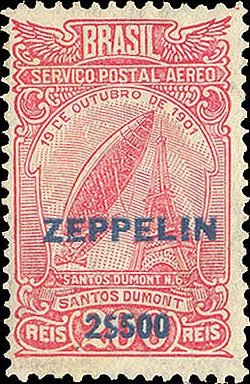
- Brazil’s Zeppelin Overprint Issues: Brazil, a frequent destination on Zeppelin routes, issued stamps overprinted with “Zeppelin” to indicate mail destined for or carried by these airships, often used during the 1930s intercontinental postal exchanges.
How Zeppelin Stamps Reflect Early 20th-Century Fascination with Air Travel
Zeppelin stamps capture a moment when humanity was on the cusp of conquering the skies. The dramatic imagery, often showing the airship soaring above oceans or continents, embodied a spirit of discovery and progress. Collectors of these stamps are not just obtaining postal history; they are preserving a visual testimony of the era’s optimism.
This fascination also translated into the rarity and desirability of Zeppelin mail covers. Mail carried aboard flights such as the 1933 Pan-American flight or the 1936 South America route often bear distinctive cachets and postmarks that verify their journey. These artifacts allow historians and collectors to trace the global networks fostered by early airships.
Anecdote: The Graf Zeppelin’s 1930 Pan-American Flight
In October 1930, the Graf Zeppelin embarked on a remarkable Pan-American flight from Germany to Brazil and the United States, carrying thousands of pieces of mail. One notable cover, mailed from Friedrichshafen, Germany, to New York City, bore the 65-cent U.S. Graf Zeppelin stamp alongside German Zeppelin overprints. This convergence of international postage on a single cover demonstrates the global cooperation and enthusiasm surrounding Zeppelin mail service. Today, such covers are prized by collectors for their historical and philatelic significance.
Practical Tips for Collectors of Zeppelin Mail and Stamps
- Verify Authenticity: Due to the high value and popularity of Zeppelin stamps and covers, counterfeits exist. Collectors should seek expert certification, especially for high-denomination stamps like the U.S. Graf Zeppelin issues.
- Focus on Postal Markings: The cachets and postmarks indicating actual Zeppelin carriage enhance an item’s value and historical interest. Study the flight dates and routes to understand the context of each cover.
- Preserve Condition: As with all philatelic items, condition is paramount. Avoid exposure to light, moisture, and handling that could damage the stamps or covers.
- Research Flight Histories: Understanding the specific Zeppelin flights and their routes enriches appreciation and aids in identifying genuine mail. Resources include specialized catalogs and Zeppelin flight logs.
Legacy of Zeppelin Mail in Modern Philately
Though the heyday of Zeppelin mail ended with the tragic Hindenburg disaster in 1937 and the rise of heavier-than-air flight, the legacy of Zeppelin stamps endures. They remain a vivid reminder of a pioneering era when the skies were a new frontier, and postal history was written aboard majestic airships.
Collectors and historians treasure Zeppelin mail as a hybrid of technological innovation and cultural storytelling. The stamps and covers serve as tactile links to a time when the fusion of art, science, and communication heralded a new age of global interconnectedness.
Visual Summary — Article in Motion
Conclusion
The Zeppelin mail stamps are more than just philatelic curiosities; they are historical documents reflecting humanity’s early attempts to conquer the skies and redefine communication. These stamps encapsulate the spirit of innovation and international cooperation that characterized the early 20th century. For historians, collectors, and enthusiasts, the Zeppelin mail offers a fascinating window into the intersection of technology, culture, and postal history.