Watch the video
Introduction: The Bay of Pigs Invasion in Historical Context
The Bay of Pigs invasion stands as one of the most dramatic and consequential episodes of the Cold War era. In April 1961, a CIA-backed force of Cuban exiles attempted to overthrow Fidel Castro’s revolutionary government, resulting in a swift and decisive Cuban victory. Beyond its geopolitical ramifications, this event has been immortalized through a unique medium: Cuban postage stamps. These small yet potent artifacts offer a vivid lens into how Cuba documented and propagandized the invasion, blending art, politics, and history into collectible pieces that continue to fascinate philatelists worldwide.
The Role of Postage Stamps in Political Messaging
Postage stamps have long served as more than just facilitators of mail; they are miniature canvases of national identity and propaganda. Governments use stamps to commemorate significant events, celebrate heroes, and project ideological narratives. In Cuba, a country shaped by revolutionary fervor and Cold War tensions, stamps became a vital tool for communicating the state’s perspective both domestically and internationally.
During times of political upheaval, postage stamps act as historical documents, capturing the zeitgeist. The Bay of Pigs invasion provided the Cuban government with a dramatic episode to memorialize through philately, turning stamps into revolutionary ink that narrated a story of defiance and victory against imperialism.
Cuban Stamps Documenting the Bay of Pigs Invasion
Early Stamp Issues: Immediate Reactions
Just months after the failed invasion, Cuba issued a series of stamps that poignantly referenced the event. These early issues were designed to bolster national pride and underscore the triumph of the revolutionary forces. The imagery and inscriptions highlighted themes of heroism, sacrifice, and anti-imperialist resistance.
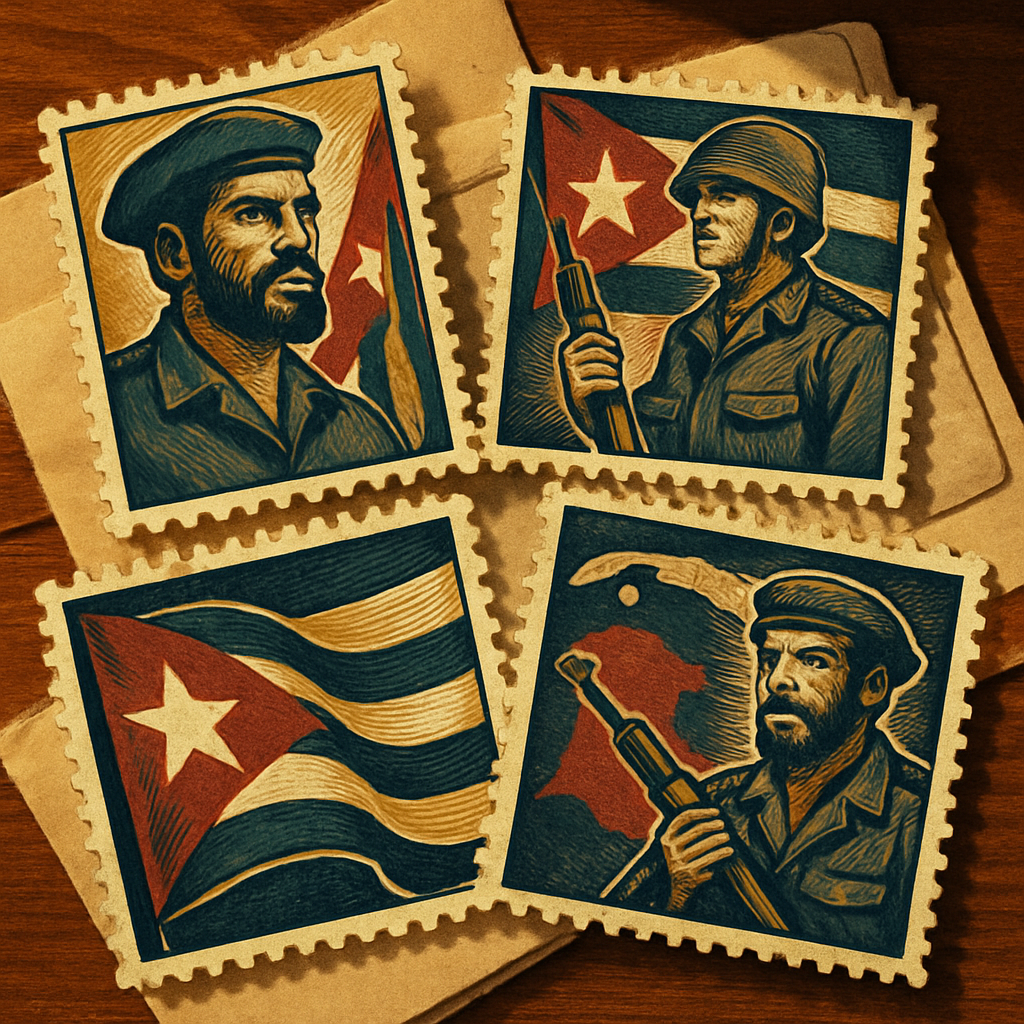
- Iconography: The stamps often depicted armed revolutionaries, Cuban soldiers, and symbolic elements like the Cuban flag and maps of the Bay of Pigs area.
- Slogans and Text: Phrases such as “Victoria Revolucionaria” (Revolutionary Victory) and “Defensa de la Patria” (Defense of the Homeland) were common, reinforcing the government’s narrative.
- Propaganda Messaging: These stamps served as tools to unify the Cuban population, reminding citizens of the government’s resilience and the failure of foreign aggression.
Symbolism and Artistic Elements
The design of the Bay of Pigs stamps is rich with symbolism. Artists carefully selected colors, motifs, and compositions to evoke emotional responses and communicate ideological messages. For example:
- Red and Black: Colors symbolizing revolution and mourning for fallen heroes.
- Dynamic Poses: Images of soldiers in action embodied courage and determination.
- National Symbols: The Cuban star and flag reinforced sovereignty and patriotism.
These artistic choices ensured that the stamps were not just postal items but also powerful visual statements.
Philatelic Commemorations Over Time
Beyond the immediate post-invasion issues, Cuba continued to issue stamps commemorating anniversaries and related themes. These later releases often expanded on the original narratives, incorporating broader revolutionary iconography and highlighting key figures involved in the conflict.
Notable Anniversary Issues
- 5th and 10th Anniversaries: Stamps issued on these milestones often featured more elaborate designs, including portraits of Fidel Castro and other revolutionary leaders.
- Propaganda Series: Multi-stamp sets that depicted different phases of the invasion and subsequent Cuban victory.
Such commemorations serve as a reminder of how the Bay of Pigs invasion became a foundational myth for the Cuban revolutionary government.
International Impact and Collecting Interest
The Bay of Pigs stamps attracted attention far beyond Cuba’s borders. Collectors and historians alike value these issues for their artistic merit and historical significance.
- Cold War Collectibles: Collectors specializing in Cold War memorabilia prize these stamps for their ideological content and rarity.
- Educational Use: Museums and educators use these stamps to illustrate propaganda methods and Cold War history.
- Market Value: Rare and well-preserved examples can command significant prices at philatelic auctions.
Collector Tips for Bay of Pigs and Cuban Revolutionary Stamps
For enthusiasts interested in collecting Cuban stamps related to the Bay of Pigs invasion, here are several tips to enhance your philatelic journey:
- Research Provenance: Verify the authenticity and issuance dates to avoid counterfeit or reprints.
- Condition Matters: Mint condition stamps with original gum are highly desirable, but used stamps with clear cancellations also hold value.
- Look for Complete Sets: Many commemorative issues were released in sets; collecting entire series provides a fuller historical narrative.
- Understand the Context: Familiarize yourself with the historical background to better appreciate the symbolism and messaging.
- Consult Specialized Catalogs: Use philatelic catalogs focusing on Cuban stamps or Cold War issues for accurate valuations and identification.
Interesting Anecdotes and Historical Insights
One fascinating story involves the Cuban postal workers who played a subtle yet crucial role in disseminating these stamps during a time of intense political tension and economic hardship. Despite challenges, their commitment ensured that the revolutionary message reached every corner of the island and beyond.
Additionally, some Bay of Pigs stamps were reportedly used as covert communication tools during the invasion’s aftermath, illustrating how postage stamps can function beyond their intended purpose.
Visual Summary — Article in Motion
Conclusion
The Cuban stamps documenting the Bay of Pigs invasion are more than collectible pieces; they are revolutionary ink etched onto small canvases that narrate a tale of resilience, ideology, and historical memory. For philatelists and historians alike, these stamps offer a unique window into how a nation confronted a critical Cold War flashpoint and transformed it into a lasting symbol of sovereignty and defiance. Collecting and studying these stamps not only enriches one’s understanding of philately but also deepens appreciation for a pivotal moment in 20th-century history.