Watch the video
Introduction to the Trans-Saharan Trade and Philately
The Trans-Saharan trade routes, spanning centuries before modern borders, were vital arteries connecting the kingdoms of West Africa to North Africa and beyond. These routes not only facilitated the exchange of gold, salt, and other goods but also fostered cultural, religious, and technological exchanges. Today, the legacy of these ancient pathways is preserved not only in historical texts and archaeological sites but also through philatelic artifacts—stamps that commemorate and celebrate the rich history of these trade networks.
Philately, the collection and study of postage stamps, offers a unique lens into the historical narratives of nations. West African countries, many of which were pivotal nodes on the trans-Saharan routes, have issued stamps that reflect their heritage and the enduring impact of the trade caravans. This article explores how these stamps encapsulate the spirit of the trans-Saharan trade, highlighting key caravan cities, goods exchanged, and the vibrant cultural interactions memorialized in postal history.
Historical Overview of the Trans-Saharan Trade Routes
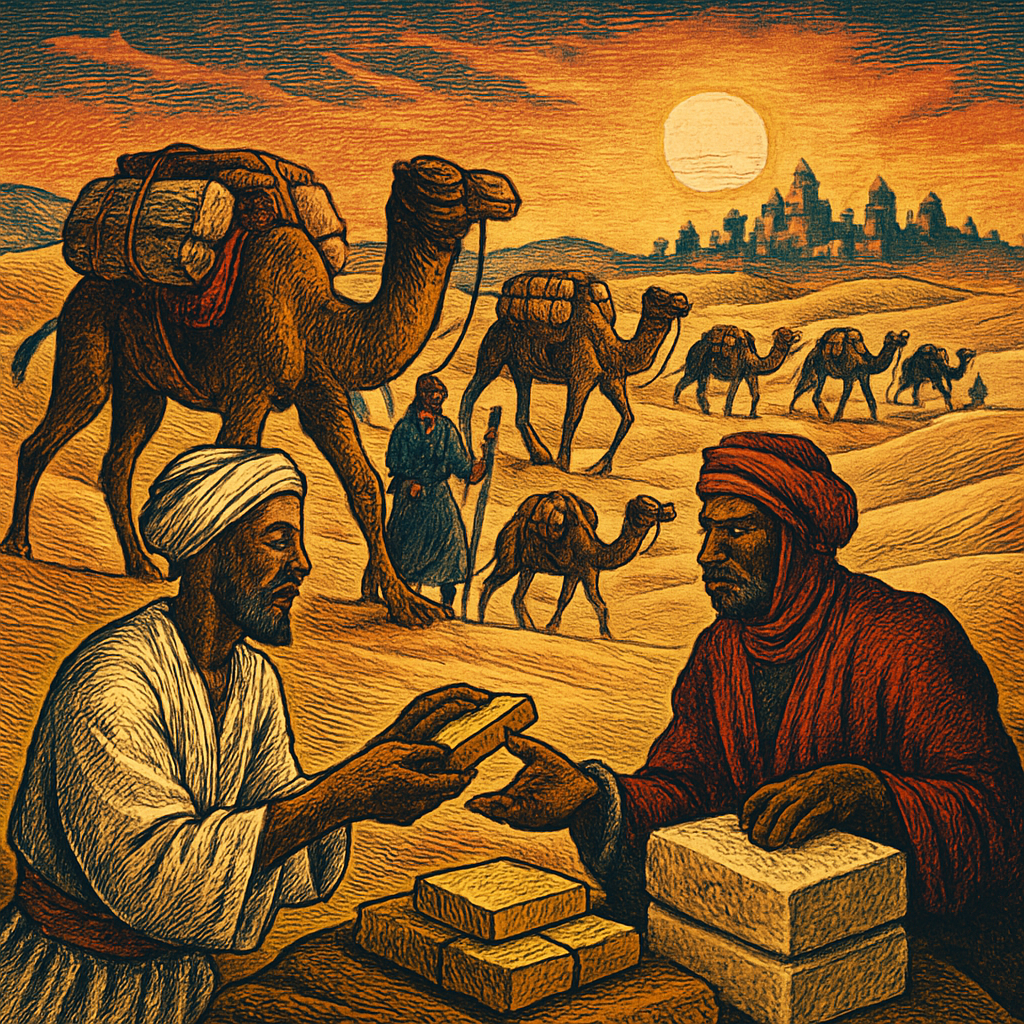
The trans-Saharan trade routes date back to at least the 8th century AD, flourishing particularly between the 12th and 16th centuries. These routes connected the Mediterranean economies with the rich resources of sub-Saharan Africa. Caravans, often composed of camels known as the “ships of the desert,” traversed harsh desert environments to transport goods such as gold, ivory, salt, kola nuts, and slaves.
Key kingdoms along these routes included the Ghana Empire, Mali Empire, and Songhai Empire. Cities like Timbuktu, Gao, and Agadez became vibrant centers of commerce and learning, facilitating not only economic exchange but also the spread of Islam and literacy. The trade routes helped establish West Africa as a pivotal player in global medieval commerce, influencing Europe, the Middle East, and beyond.
Significant Goods and Their Philatelic Depiction
Gold and salt were among the most valuable commodities transported across the Sahara. Gold mined in West Africa fueled economies far beyond the continent, while salt was a crucial preservative and dietary mineral for desert communities. Ivory and kola nuts also held significant cultural and economic importance.
Many West African stamps depict these goods to emphasize their historical importance. For instance, Mali’s stamp issues often feature gold nuggets and salt blocks, symbolizing the wealth and trade that shaped the region’s history. These images serve as educational tools, connecting modern audiences with ancient economies.
Caravan Cities Immortalized in Stamps
Several cities along the trans-Saharan routes have been honored in postage stamps issued by West African countries, each reflecting a unique facet of the region’s history.
Timbuktu: The Intellectual and Commercial Hub
Timbuktu, located in present-day Mali, was a legendary center of Islamic scholarship and trade. Known for its ancient manuscripts and universities, the city became synonymous with wealth and knowledge. Postage stamps from Mali frequently illustrate Timbuktu’s iconic mud-brick mosques and manuscripts, celebrating its dual role as a commercial and intellectual beacon.
Gao: The Songhai Capital
Gao served as the capital of the Songhai Empire, one of the largest African empires in history. Its strategic location on the Niger River made it a critical trade hub. Stamps from Niger and Mali often depict the ancient city’s landmarks and the powerful rulers who governed it, reflecting its historical prominence in the trans-Saharan trade.
Agadez: Gateway to the Sahara
Agadez, in modern-day Niger, was a crucial oasis and caravan resting point. It was known for its distinctive mud architecture and as a trading post linking the Sahel to the Sahara. Niger’s postage stamps highlight Agadez’s cultural heritage and its role as a lifeline for desert caravans.
Cultural Exchange Reflected in Stamp Designs
The trans-Saharan trade was not merely about material goods—it was a conduit for cultural diffusion. Islam spread across West Africa through these routes, influencing art, language, and governance. The exchange of ideas was as significant as the exchange of goods.
Philatelic issues from countries like Mali, Niger, and Senegal often pay homage to this cultural melting pot. Stamps may depict traditional attire, architectural styles, and religious symbols such as the crescent moon and mosques. These elements underscore the intertwined nature of commerce and culture in the region’s history.
Religious and Educational Themes
The spread of Islam led to the establishment of Quranic schools and universities, especially in cities like Timbuktu. Stamps celebrate this heritage by portraying manuscripts, scholars, and historic libraries, reminding collectors of the profound intellectual legacy fostered by trans-Saharan connectivity.
Colonial and Post-Colonial Stamp Issues Depicting Trans-Saharan Trade
During the colonial period, European powers such as France issued stamps in their West African territories that included imagery related to local trade and culture. These stamp designs often aimed to project a romanticized or exotic vision of Africa to European audiences, sometimes blending factual history with colonial narratives.
Post-independence, many West African nations have reissued stamps that reclaim and celebrate authentic historical narratives, including the trans-Saharan trade. These contemporary issues are often more accurate and respectful representations of the region’s heritage and serve as valuable educational tools for both local populations and international philatelists.
Collector Tips for Philatelic Items Related to Trans-Saharan Trade
For collectors interested in this niche, several tips can enhance the collecting experience and the value of their collections:
- Research Historical Context: Understanding the history of the trans-Saharan trade enriches the appreciation of stamps depicting related themes.
- Focus on Key Issuing Countries: Mali, Niger, Senegal, Burkina Faso, and Algeria frequently issue stamps related to trans-Saharan themes.
- Seek Limited Editions and Commemorative Issues: Many countries release special issues during anniversaries or cultural festivals, which may be rarer and more valuable.
- Preserve Provenance and Condition: Maintain stamps in mint condition and document their origins to enhance collectible value.
- Explore Thematic Collections: Combine stamps with postcards, envelopes (covers), and cancellations from caravan cities for a richer narrative.
Where to Find Authentic Philatelic Items
Specialist dealers and premium online stores like Obelisk Stamps offer framed displays and curated collections that celebrate the trans-Saharan trade routes. These platforms provide collectors access to authentic, high-quality items often accompanied by detailed historical descriptions.
Fascinating Anecdotes from Postal History
One interesting story involves the 1960s stamp issues from Mali, which featured the legendary camel caravans crossing the Sahara. These stamps were not only popular among local collectors but also caught the attention of international philatelists fascinated by the romantic image of desert trade.
Another anecdote centers on the depiction of the Sankore University in Timbuktu on a 1970s postage stamp, highlighting the city’s status as a center of learning. This stamp helped raise global awareness of Africa’s scholarly contributions during medieval times.
Visual Summary — Article in Motion
Conclusion
The philatelic footprints of the trans-Saharan trade routes offer a captivating glimpse into a world where commerce, culture, and knowledge intersected across vast deserts. Through carefully crafted postage stamps, West African nations preserve and celebrate this rich history, providing collectors and historians alike with tangible connections to a bygone era. Whether you are a seasoned philatelist or a history enthusiast, exploring these stamps opens a window into the enduring legacy of the Sahara’s trade caravans and the kingdoms they connected.